Industry Insights & Manufacturing Knowledge
Expert guides, textile sourcing strategies, quality assurance tips, and international export trends from KK Fashion Exports.
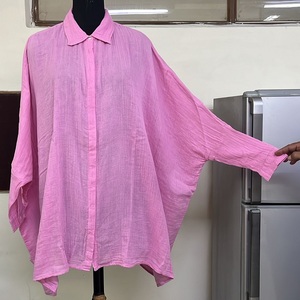
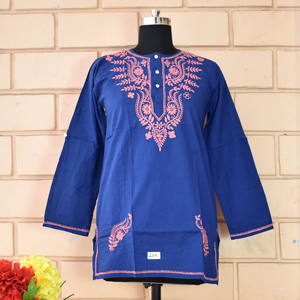
The commercial garment landscape in Riyadh, Saudi Arabia, is undergoing an unprecedented structural evolution. Driven by Saudi Vision 2030, rising disposable income, and an expanding retail footprint across iconic hubs like Olaya Financial District, Riyadh Park, and Nakheel Mall, the demand for high-grade modest women's apparel has surged exponentially. Central to this market growth is the high-density demand for premium embroidered cotton tunics (popularly retailed as modest tunics, longline shirts, and designer kurtis).
Navigating the Riyadh apparel market requires a subtle understanding of localized climate demands, cultural preferences, and rigorous regulatory compliance. With summer temperatures routinely exceeding 45°C, synthetic fabrics are rapidly being phased out by Saudi consumers in favor of 100% natural, highly breathable long-staple combed cotton, organic cotton gauze, and lightweight handloom weaves. Furthermore, wholesale buyers in Riyadh require strict adherence to modest fit profiles—featuring longer hemlines, opaque fabric weights (140 to 180 GSM), full or 3/4 sleeve configurations, and non-restrictive necklines suitable for layering with traditional abayas or wearing as elevated private-gathering loungewear.
Strategic Information Gain for Saudi Importers: Sourcing direct from Indian manufacturing hubs like Noida/Delhi NCR eliminates intermediary markups by up to 35%, granting Riyadh brands direct OEM access to intricate Lucknawi Chikankari, Schiffli, and hand-beaded embroidery techniques with full SASO / SABER certification compatibility.
OEM/ODM Customization Available: Adjust fabric GSM, embroidery motifs, sizing charts (EU/GCC standard S–3XL), and brand labelling.
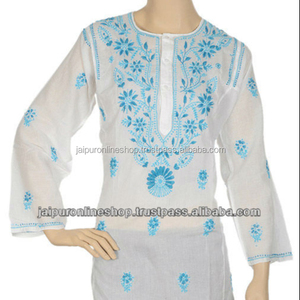
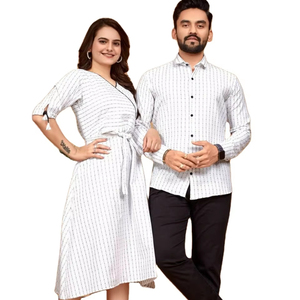
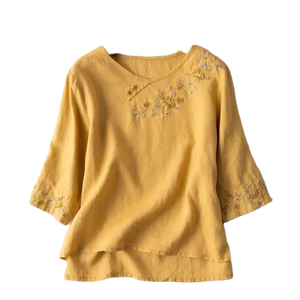
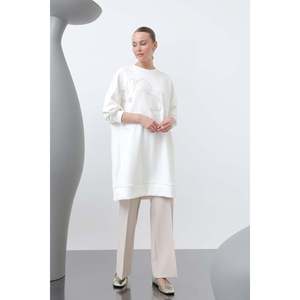
To withstand the stringent quality audits of top-tier Middle Eastern fashion houses and pass customs inspections smoothly at King Abdulaziz Port (Dammam) or Riyadh Dry Port, tunics must satisfy rigorous physical and chemical metrics. Below is our engineering baseline for all tunic manufacturing destined for the GCC region:
| Quality Parameter | KK Fashion Exports Benchmark | Saudi Commercial Standard (SASO) | B2B Advantage for Importers |
|---|---|---|---|
| Fabric Composition | 100% Combed Cotton / Organic Gauze / Linen | Accurate Fiber Labeling Mandate | Zero synthetic skin irritation under high ambient desert temperatures. |
| Weight (GSM) | 140 GSM to 180 GSM (Opaque Modest Grade) | Non-see-through apparel requirement | Eliminates need for separate linings; reduces garment weight & cost. |
| Color Fastness to Light | Grade 4-5 (ISO 105-B02 Tested) | Min Grade 3.5 | Prevents fading under intense Riyadh UV index (UV 11+ exposure). |
| Shrinkage Control | < 3% Post-Sanforization & Steam Tunneling | < 5% standard | Maintains tailored modest silhouettes after repeated domestic laundering. |
| Embroidery Tensile | Viscose/Rayon multi-head, 600+ RPM tight pitch | No loose threads / structural integrity | Resists snagging, fraying, and seam distortion during high-volume wear. |
| Chemical Safety | REACH & OEKO-TEX 100 Compliant (Azo-Free) | Heavy metals & Formaldehyde free | Guaranteed smooth clearance through Saudi SABER e-platform. |
Understanding the daily lifestyle routines of contemporary Saudi women is key to stocking high-velocity retail inventories. Embroidered cotton tunics serve multiple distinct wardrobe functions in Riyadh:
Inside homes, private compounds, and women-only gatherings, Saudi women replace outer abayas with vibrant, heavily embroidered cotton tunics. Soft cotton gauze and intricate Chikankari kurtis offer supreme tactile comfort while projecting luxurious elegance.
With Saudi women rapidly entering the professional workforce and higher education, minimal, tone-on-tone embroidered button-down tunics (paired with tailored wide-leg trousers) have become a staple for professional daily wear across government offices and corporate headquarters.
During Holy Month Ramadan Iftar gatherings and Eid celebrations, retail demand spikes by over 300%. Sourcing rich jewel-tone cotton tunics with gold-thread Zardozi trim or delicate hand-stitched floral borders allows retailers to capture high-margin holiday sales.
According to recent regional retail studies, Saudi Arabia’s modest fashion sector is projected to reach $12.4 billion by 2028. Within this macro-growth, specific micro-trends are shaping purchasing behavior across Riyadh's boutique sector:
Riyadh garment buyers are shifting away from third-party European distributors. Partnering directly with certified OEM factories in India (such as KK Fashion Exports in Noida) allows brands to customize thread work, order smaller test batches, and achieve gross profit margins exceeding 65%.
Consumer awareness around eco-friendly fabrics is rising rapidly. Double-layer cotton gauze tunics with subtle raw-edge embroidery details are trending heavily among younger Saudi consumers looking for effortless, bohemian luxury.
As an established B2B garment manufacturer based in Noida, Uttar Pradesh, India (adjacent to New Delhi’s textile hub), KK Fashion Exports provides complete vertically integrated production capabilities for Middle Eastern retailers and international clothing brands.
Audited repeatedly by URS Verification Pvt. Ltd. (2017–2026), our facility adheres to the highest international ethical labor practices, zero child labor, fair wage systems, and complete supply chain transparency.
From automated pattern making, screen printing tables, multi-head computer embroidery machines, to thread vacuum trimmers, steam pressing units, and metal needle detectors—everything is processed under one roof.
We handle prototype sampling, custom branding/hangtags, export packaging, bill of lading documentation, and door-to-door air/sea freight logistics directly into Saudi Arabia.
Every single tunic manufactured at KK Fashion Exports passes through an unyielding 8-tier inspection workflow to guarantee zero defective items reach your retail warehouse:
We provide comprehensive laboratory test reports (Azo-free dyes, fabric composition, color fastness) from accredited international testing agencies (SGS / Intertek). We supply all required technical documentation and invoices structured to register your Certificate of Conformity (CoC) smoothly on the Saudi SABER portal.
Our standard flexible MOQ starts at 100 to 200 pieces per style/colorway for custom OEM orders. For existing catalog designs with in-stock fabrics, smaller test runs can be facilitated to help boutique owners evaluate local consumer response in Riyadh.
Yes. We regularly produce tailored GCC sizing specifications. These include expanded chest measurements, longer sleeve lengths (58-62cm), extended total garment length (85-115cm for full modest coverage), and wider hip allowances designed specifically for the regional demographic.
Counter-samples are produced and dispatched via courier (DHL/FedEx) within 7 to 10 days. Upon sample approval and deposit confirmation, bulk production takes 30 to 45 days. Air freight to King Khalid International Airport (Riyadh) takes 3-5 days, while sea freight to Dammam Port takes approximately 14-18 days.
Absoltely. We provide full OEM packaging customization including woven neck labels, satin care labels with Arabic laundering instructions, branded hangtags with SAR pricing / barcodes, and custom polybags ready for immediate shelf placement.
Request our full 2025/2026 Wholesale Embroidered Cotton Tunic Catalog, complete with fabric swatches, wholesale price ladders, and OEM customization options.