Expert guides, textile sourcing strategies, quality assurance tips, and international export trends from KK Fashion Exports.
Custom OEM Sustainable Fabric Clothing Production Manufacturer & Factory serving Ho Chi Minh City
High-Performance Textile Engineering, SMETA 4-Pillar Audited Ethical Garment Manufacturing & Circular Eco-Fabrics Built for Southeast Asian & International Fashion Brands
Sustainable Product Catalog
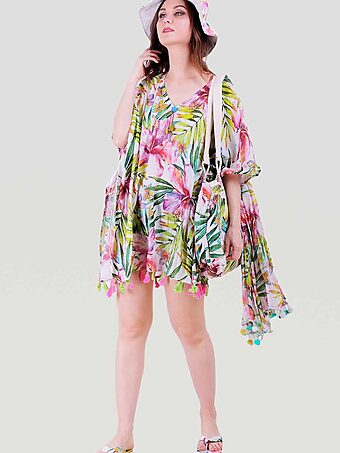
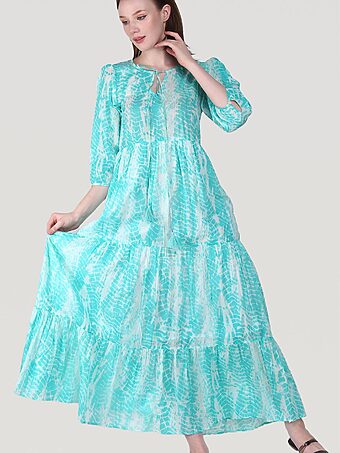
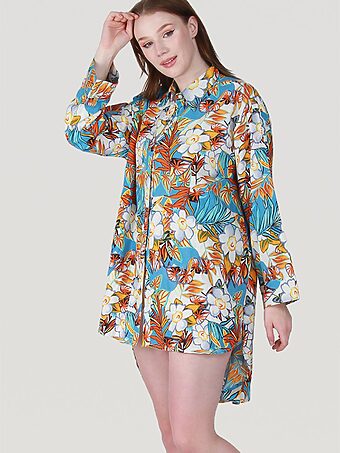
Featured OEM Eco-Fabric Apparel Solutions
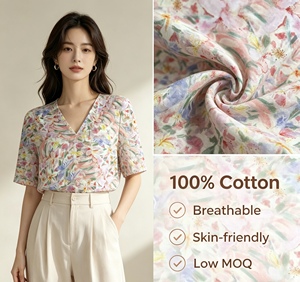
Engineered with Lyocell blends, GRS recycled yarns, and organic long-staple cotton tailored for the high humidity micro-climate of Ho Chi Minh City and global export markets.
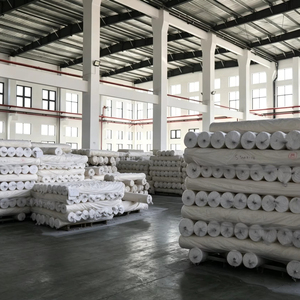
Social Compliance & Ethical Audited Infrastructure
1. Sustainable Textile Engineering & Sourcing Ecosystem for Ho Chi Minh City
As Ho Chi Minh City (HCMC) solidifies its positioning as the primary commercial heartbeat and strategic sourcing nexus of Southeast Asia, fashion brands, private labels, and retail conglomerates operating within District 1, District 2 (Thao Dien design quarter), District 7, and the Tan Bình garment district face a pivotal supply chain evolution. Modern consumers and international regulatory frameworks—such as the EU Corporate Sustainability Due Diligence Directive (CSDDD) and the US Fashion Act—no longer tolerate greenwashed claims. Sourcing managers serving the Ho Chi Minh City market demand verified Information Gain: granular, quantifiable textile performance data, traceable raw material origins, and certified ethical labor practices.
Operating as an experienced custom OEM sustainable fabric clothing production manufacturer and factory, our facility bridges the critical gap between high-end textile research and industrial-scale apparel execution. Ho Chi Minh City experiences a humid tropical micro-climate characterized by average relative humidity levels ranging from 75% to 85% and year-round ambient temperatures averaging 28°C to 34°C. Standard synthetic fabrics and heavy, non-treated cottons underperform dramatically in this region, leading to moisture retention, fiber degradation, bacterial growth, and wearer discomfort.
Architectural Supply Chain Advantage: By integrating localized fiber engineering—specifically micro-denier Lyocell twills, GOTS-certified organic long-staple cottons, and GRS-certified post-consumer recycled activewear synthetics—our production ecosystem delivers superior vapor permeability, quick-dry performance, and mechanical durability tailored precisely for tropical urban mobility in Vietnam and global export destinations via Cat Lai Port.
To achieve maximum comfort and garment longevity in high-humidity zones like Ho Chi Minh City, fabric selection must adhere to strict thermodynamic standards:
Cotton-Lyocell Twill Engineered
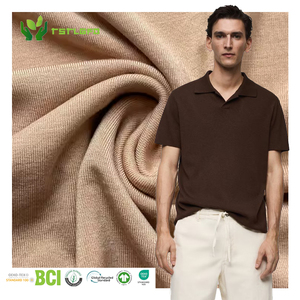
Blending 50% combed organic cotton with 50% wood-pulp Tencel/Lyocell creates a closed-loop fabric possessing a moisture regain rate of 11.5% (versus 8% for standard cotton). This structural architecture actively pulls sweat away from the epidermis, providing a smooth silk-like tactile feel resistant to friction and humidity-induced swelling.
Heavyweight French Terry Anti-Pilling
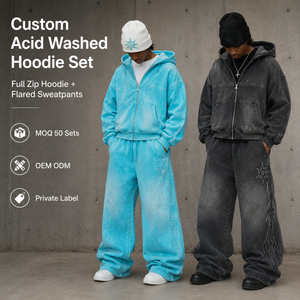
Utilizing 320 to 420 GSM long-staple combed cotton looped backing, our streetwear French Terry garments achieve an ISO 12945-2 anti-pilling rating of Grade 4.5. The unbrushed inner loops facilitate natural air-channeling, preventing thermal trapping while delivering structured Y2K and streetwear silhouettes.
GRS Recycled Poly-Spandex Activewear
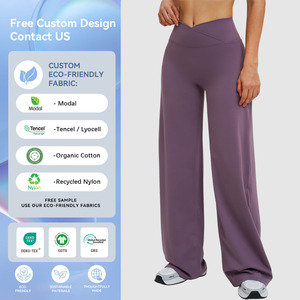
Synthesized from post-consumer PET bottles, our GRS-certified activewear matrix features 4-way mechanical stretch (82% Recycled Polyester / 18% Elastane) treated with non-toxic OEKO-TEX hydrophobic finishes, accelerating evaporation cycles down to under 25 minutes in 80% humidity tests.
2. Technical Specifications & Material Performance Comparison Matrix
Below is the quantitative engineering data comparing our core sustainable fabric formulations, helping brand buyers serving Ho Chi Minh City make precise technical decisions for their activewear, streetwear, and casual resortwear lines:
3. Localized Sourcing Trends & Application Scenarios in Ho Chi Minh City
Ho Chi Minh City operates both as a thriving retail market of over 9 million residents and as Southeast Asia's principal apparel sourcing coordination point. Understanding the localized usage scenarios and consumer expectations within Vietnam enables our OEM production unit to deliver tailored garment solutions:
A. The "Thao Dien Activewear & Wellness" Movement (District 2 Hub)
In expatriate-heavy and affluent districts such as Thao Dien (District 2) and Phu My Hung (District 7), boutique fitness, Pilates, and yoga studios have driven explosive demand for premium, non-see-through, eco-conscious activewear. Brands catering to this segment require high-gauge interlock knits with zero grin-through when stretched, moisture-wicking technology, and squat-proof opacity. Our custom recycled GRS leggings and matching two-piece sets are engineered with flatlock 6-needle stitching to eliminate skin friction during high-humidity workout sessions.
B. Urban Scooter Commuting & Heavyweight Streetwear (Gen-Z Vietnam Trend)
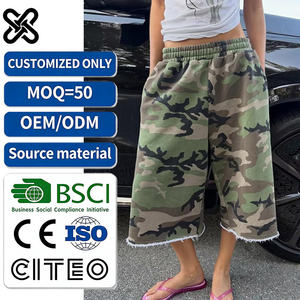
Scooter travel remains the dominant mode of transport in HCMC. Apparel must withstand heavy sun exposure, exhaust heat, and sudden monsoon showers. Vietnamese Gen-Z consumers favor oversized, heavyweight streetwear—such as acid-washed full-zip hoodies, distressed flared sweatpants, and 3/4 French Terry camouflage shorts. By applying eco-friendly mineral washing and eco-certified reactive dyes, our OEM factory produces vintage-distressed looks without causing tensile fiber degradation or toxic effluent discharge.
C. Nearshoring & Integrated Supply Logistics via Cat Lai Port
For international apparel procurement offices stationed in HCMC, sourcing from our SMETA-audited manufacturing infrastructure reduces lead-time bottlenecks. With direct customs documentation, streamlined ASEAN trade pathways, and comprehensive export compliance (GSTIN, IEC, Form D/E certificate support), we ensure rapid vessel dispatch from major regional container terminals directly to European, North American, and Australian ports.
4. Enterprise Infrastructure & The 8-Stage Quality Assurance Blueprint
Backed by over two decades of global apparel manufacturing leadership, 4+ million garments exported, and 8 successful SMETA 4-Pillar social compliance audits (spanning 2017 through 2026), our enterprise quality management operates on a zero-defect mandate. Every garment batch manufactured for clients serving Ho Chi Minh City undergoes a strict 8-stage quality inspection workflow:
Stage 1: Raw Fabric Inspection
Laboratories perform yarn count verification, GSM weight calibration, composition burn-testing, and raw roll defect flagging before cutting begins.
Stage 2: Printed Sample Inspection
Screen accuracy, digital placement scale, color formula alignment (Pantone TCX matching), and initial wash fastness tests are verified on physical strike-offs.
Stage 3: Bulk Printed Fabric Check
Continuous yardage checks guarantee uniform ink penetration, zero bleeding, and color fastness to perspiration under ISO 105-E04 standards.
Stage 4: Bill of Materials (BOM) Inspection
All accessories, lead-free and nickel-free YKK/metal zippers, GOTS-certified drawcords, brand neck labels, and care tags undergo tensile pull tests.
Stage 5: Stitched Sample Inspection
Initial off-the-line pre-production samples undergo complete 3D body fitting, seam strength stress-testing, and dimensional shrinkage evaluation after industrial laundering.
Stage 6: Midline Stitching Inspection
In-line quality control inspectors audit stitch-per-inch (SPI) uniformity, seam elasticity on knitwear, and tension alignment directly on active sewing lines.
Stage 7: Pre-Packing Inspection
100% garment inspection using automated thread vacuum trimming, steam pressing, and dimensional tolerance checks within +/- 0.5 cm specifications.
Stage 8: Inspection During Packing
Final metal/needle detection passing through conveyor needle detectors, carton weight calibration, barcode scan verification, and moisture-absorbent silica gel packing.
5. Frequently Asked Questions by Apparel Buyers Serving Ho Chi Minh City
Below are technical, logistical, and commercial answers to common procurement queries raised by fashion brands, retail buyers, and importers operating in Vietnam and broader global export networks:
Q:
What are your Minimum Order Quantities (MOQs) for custom sustainable fabric garments delivered to HCMC?
Our typical OEM production MOQ starts at 100 to 300 pieces per style/colorway for stock sustainable fabrics (such as 100% Organic Cotton or standard Lyocell blends). For custom yarn-dyed fabrics, specific pantone-matched GRS recycled polyesters, or specialized acid-wash finishes, MOQs range between 300 and 500 pieces per style. We also support boutique scaling with low MOQ sampling protocols.
Q:
How do your eco-friendly fabrics perform under Ho Chi Minh City's tropical humidity?
Our fabrics are specifically selected and finished for humid environments. Our Cotton-Lyocell twills and GRS Recycled Activewear feature moisture regain percentages significantly higher than standard synthetic fabrics, accelerating capillary action to pull sweat away from the body. Fabrics undergo color fastness tests under artificial perspiration (ISO 105-E04 Grade 4.0+) to ensure dyes do not bleed under high-humidity conditions.
Q:
Can your factory produce tech packs from rough design concepts or reference photos?
Yes, our in-house pattern-making and technical design department specializes in translating sketches, physical reference samples, or initial mood boards into production-ready digital Tech Packs. We provide full grading charts, bill of materials specifications, and 3D digital sampling renderings prior to physical master sample production.
Q:
What international social compliance and environmental certifications back your facility?
Our manufacturing operations are SMETA 4-Pillar audited (with 8 consecutive audits completed between 2017 and 2026), ensuring verified fair wages, occupational safety, environmental management, and business ethics. Our raw material suppliers provide GOTS (Global Organic Textile Standard), GRS (Global Recycled Standard), and OEKO-TEX Standard 100 certifications upon request.
Q:
What is the standard turn-around time from sample approval to bulk delivery at Cat Lai Port?
Physical sampling takes approximately 7 to 10 working days upon Tech Pack approval. Once the pre-production sample (PPS) is signed off, bulk manufacturing requires 25 to 35 calendar days depending on order volume and finish complexity. Freight dispatch to Cat Lai Port or air freight delivery to Tan Son Nhat International Airport (SGN) is managed directly by our export logistics desk.
Q:
How do you handle custom branding, labels, and eco-packaging for retail readiness?
We offer full private-label OEM solutions. This includes woven neck labels, recycled printed care tags, custom screen-printed interior sizing, metal branded aglets, custom engraved zippers, and biodegradable polybags or FSC-certified cardboard boxes complete with custom barcode labeling.
Launch Your Sustainable OEM Clothing Line for Ho Chi Minh City & Global Export
Connect directly with our senior textile engineers and manufacturing specialists. Receive tailored fabric swatch kits, technical advice, and competitive wholesale quotes within 24 hours.