Industry Insights & Manufacturing Knowledge
Expert guides, textile sourcing strategies, quality assurance tips, and international export trends from KK Fashion Exports.
As global apparel brands and luxury fashion houses face increasing regulatory pressures—including the EU’s Digital Product Passport (DPP), Corporate Sustainability Due Diligence Directive (CSDDD), and North American ESG disclosure mandates—the global textile procurement paradigm has permanently shifted. Sourcing sustainable apparel is no longer merely a branding option; it is an indispensable compliance core.
China remains the undeniable nerve center of advanced textile manufacturing, offering unmatched vertical integration from eco-friendly fiber production to precision tailoring. Modern OEM/ODM manufacturers across key industrial clusters are combining historic craftsmanship—such as luxury cashmere processing and worsted wool weaving—with automated zero-waste knitting, waterless digital printing, and GRS-certified recycled material processing. This whitepaper provides procurement directors, brand founders, and supply chain managers with actionable benchmarks for selecting tier-1 sustainable apparel manufacturers in China.
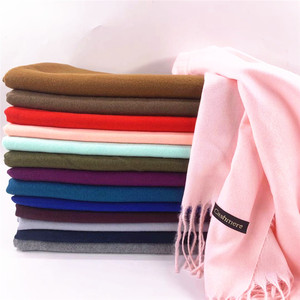
High-efficiency, eco-certified custom scarves and knitwear ready for OEM/ODM private label production with low MOQ flex-manufacturing capabilities.
 OEKO-TEX 100
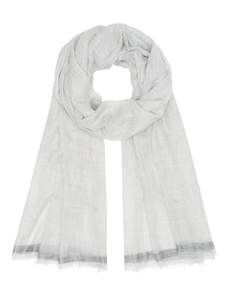 Grade-A Fiber
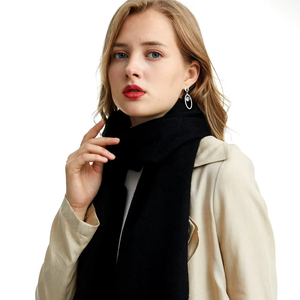 Azo-Free Dyes
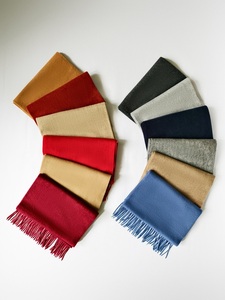 Sustainable Pastoral
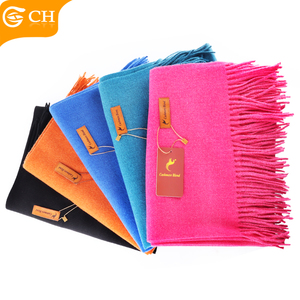 Luxury Private Label
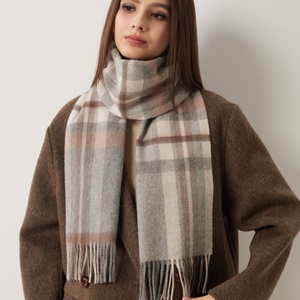 Low MOQ Flex
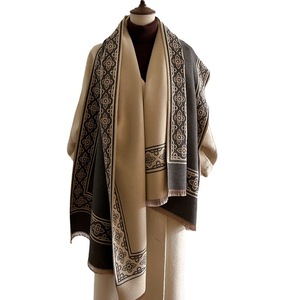 Heavyweight Thermal
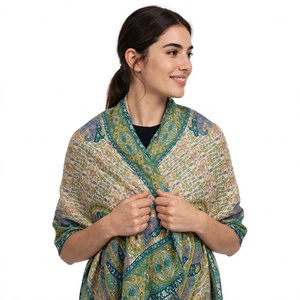 Zero Wastewater
Global fashion procurement is undergoing a systemic transformation driven by consumer demand for accountability, legislative mandates, and raw material volatility. Based on data from international trade audits and fashion intelligence frameworks, four macro sourcing trends define top-performing B2B partnerships:
Buyers are shifting from generic natural fibers to certified regenerative inputs. Cashmere and merino wool sourced directly from sustainable pastoral management schemes in Inner Mongolia ensure soil health preservation, fair herder compensation, and total fiber purity verified by DNA/isotope testing.
Leading Chinese manufacturers are replacing physical sampling iterations with 3D CAD digital twin rendering. This cuts sample turnaround from 14 days down to 48 hours, reducing material waste during pre-production by up to 90% while significantly accelerating time-to-market.
Post-industrial fiber recycling is now standard. Manufacturers are combining pre-consumer cashmere cuttings with GRS-certified recycled polyester or organic cotton, producing high-durability, soft-hand fabrics that fulfill circular economy metrics without compromising luxury texture.
Wet processing accounts for over 50% of garment carbon emissions. Modern factories are integrating supercritical CO2 dyeing, ultrasonic wash systems, and solar thermal energy, slashing water consumption by 80% and chemical discharges to zero (ZDF).
To maintain competitive advantage in international markets, China's tier-1 apparel suppliers have elevated manufacturing efficiency through advanced engineering. Key technological advancements include:
Traditional cut-and-sew garment manufacturing yields between 15% and 25% fabric scrap waste. Modern computerized seamless knitting machines weave entire scarves, shawls, and garments directly from yarn spools in one continuous three-dimensional operation. This eliminates fabric scrap entirely, lowers seam-friction for enhanced wearability, and reduces garment weight while optimizing thermal performance.
Addressing stringent REACH and OEKO-TEX Standard 100 Class I (safe for infants) requirements, advanced Chinese dyeing houses utilize non-toxic reactive dyes free from heavy metals, aromatic amines, and formaldehyde. Furthermore, ongoing research into bio-based botanical colorants (extracted from agricultural by-products such as tea leaves and nut shells) provides brands with organic colorways backed by high color fastness metrics (Grade 4.0+ under ISO 105 testing).
Through cloud-based ERP systems integrated directly with fabric spinning mills, every batch of custom scarves or knitwear carries a unique QR-embedded trace code. Brand clients can verify the exact farm cluster, scouring facility, spinning mill, and compliance audit reports for every batch delivered—providing complete transparency for end-consumers and international customs authorities.
Integrating traditional artisan craft with rigorous multi-stage quality assurance and social compliance standards.
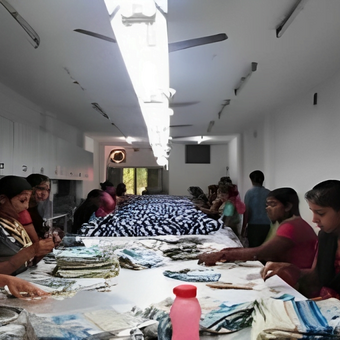
Quality integrity is enforced at every point of production. Unlike factories that rely solely on final packing checks, our manufacturing ecosystem employs a strict 8-step quality gate system:
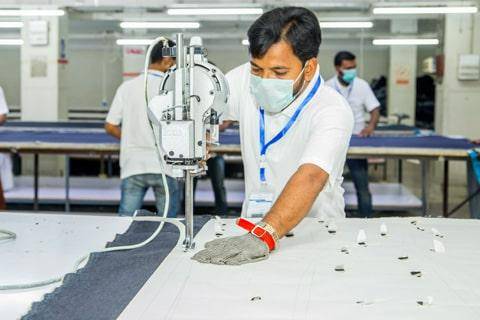
True sustainability extends beyond raw materials to human welfare. Our manufacturing operations strictly adhere to international fair labor standards:
Answers to common operational, technical, and logistical questions regarding custom apparel sourcing from China.
Elevate your product line with verified eco-friendly materials, luxury cashmere craftsmanship, and low-risk flexible manufacturing. Contact our engineering team for immediate technical consultation and custom quotes.