Industry Insights & Manufacturing Knowledge
Expert guides, textile sourcing strategies, quality assurance tips, and international export trends from KK Fashion Exports.
Direct factory supply featuring heavy-duty GSM jute weave, custom handles, and sustainable linings for high-volume commercial procurement.
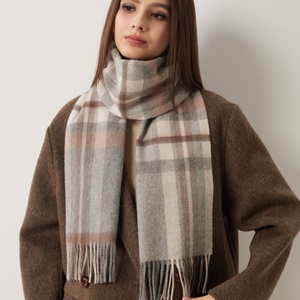
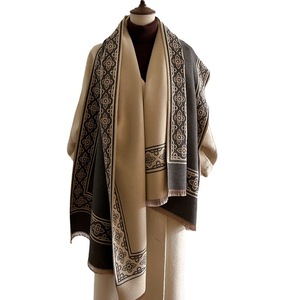
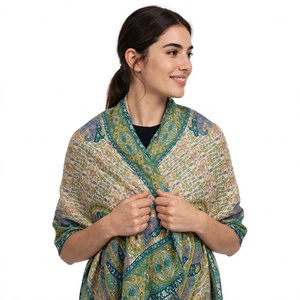
In an era defined by stringent ESG (Environmental, Social, and Governance) mandates and the global enforcement of single-use plastic restrictions, enterprise sourcing executives, brand directors, and procurement leaders are rapidly overhauling their packaging and accessory supply chains. The demand for Custom OEM Bulk Natural Jute Shopper Bags has evolved from a niche green alternative into a primary structural pillar of corporate retail, fashion merchandising, and FMCG packaging strategies worldwide.
Known as the "Golden Fiber," natural jute (Corchorus capsularis) offers unmatched tensile strength, exceptional durability, zero carbon footprint during cultivation, and complete bio-degradability. However, purchasing bulk jute shoppers at an enterprise scale requires a granular understanding of textile specs, laminate barriers, fabric GSM variations, AZO-free printing chemistry, and supply chain ethical compliance. As an experienced B2B export manufacturer with over two decades of international production expertise, KK Fashion Exports provides this comprehensive whitepaper to guide global procurement managers through the technicalities of custom jute bag manufacturing.
Unlike synthetic polypropylene (PP) non-woven bags or intensive conventional cotton totes—which require hundreds of wash-and-reuse cycles to neutralize their carbon footprint—high-density natural jute bags achieve carbon neutrality after just 4 to 6 uses, while offering a burst resistance exceeding 45 kg per square inch.
Navigating the next five years of eco-textile sourcing requires anticipating regulatory pivots and consumer behavior shifts. B2B buyers must align their product development roadmaps with these emerging structural trends:
Replacing traditional food-grade LDPE linings with Polylactic Acid (PLA) derived from cornstarch, enabling 100% industrial compostability without sacrificing moisture barrier protection.
Blending raw jute fibers with fine organic cotton (70% Jute / 30% Cotton) to create "Juco"—a refined, smooth canvas surface that allows high-definition digital transfer and fine-line screen printing.
Integrating QR codes and RFID tags directly into woven side labels, allowing end consumers to trace the farm-to-factory journey and verify ethical labor compliance in real-time.
As a primary manufacturer, KK Fashion Exports provides endless custom tailoring options for white-label, private label, and corporate promotional orders. Below is the technical breakdown required for drafting RFQs (Request for Quotations):
Jute density is measured in weight per square meter (GSM) and warp/weft yarn counts. We offer three standard grades optimized for different retail uses:
Raw jute is naturally porous. To ensure water resistance, food safety, and shape retention, we supply three internal backing systems:
A shopper bag’s weak point is invariably its handle attachment zone. Our manufacturing engineering incorporates double cross-stitching ("X-box" stitch) at all stress points. Handle options include padded cotton ropes, flat cotton webbing, real leather straps, and self-fabric jute handles.
Established in 2003 in Noida, Uttar Pradesh, India, KK Fashion Exports has grown into a leading B2B garment and eco-bag manufacturer serving over 27 countries across Europe, North America, Asia, and the Middle East. With over 4 million units exported, we combine artisanal Indian craftsmanship with modern industrial scale.
Our state-of-the-art facility is SMETA 4-Pillar Audited (having completed 8 consecutive audits between 2017 and January 2026), ensuring full social compliance, fair wage structures, environmental stewardship, and safe workplace environments.

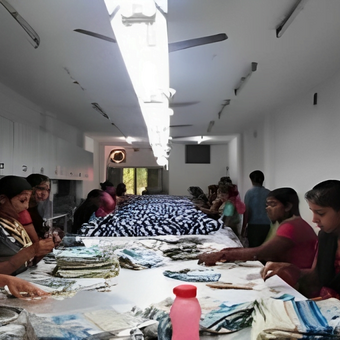
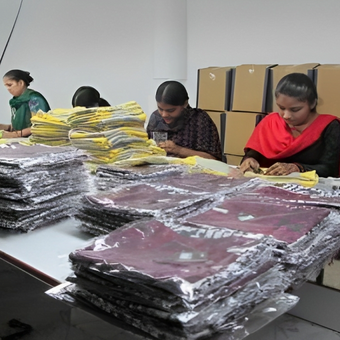
To eliminate defects in bulk production runs, every order passes through eight distinct quality control checkpoints prior to dispatch:
Testing raw jute yarn tensile strength, moisture levels, and weave uniformity.
Checking Pantone color accuracy, screen alignment, and ink adhesion.
Continuous roll inspection controlling weave flaws and lamination bond strength.
Verifying all handles, eyelets, zippers, and labels are lead & nickel free.
Evaluating pattern cutting accuracy and initial seam stress tolerances.
Random inline checks monitoring stitches-per-inch (SPI) and handle reinforcement.
Passing 100% of finished bags through high-sensitivity needle detector machinery.
Final check of moisture-absorbent silica packings, barcoding, and export cartoning.
Addressing critical technical and logistical queries submitted by international retail buyers, wholesale distributors, and brand importers.
Partner with India’s premier SMETA-audited OEM manufacturer. Request a custom quote, technical yarn swatch book, or schedule a virtual factory walkthrough today.