Industry Insights & Manufacturing Knowledge
Expert guides, textile sourcing strategies, quality assurance tips, and international export trends from KK Fashion Exports.
Engineered from premium Inner Mongolian cashmere and fine-micron Australian merino wool. Fully compliant with European CE safety standards, EU REACH regulations, and OEKO-TEX Standard 100 specifications.
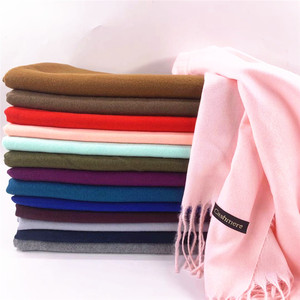
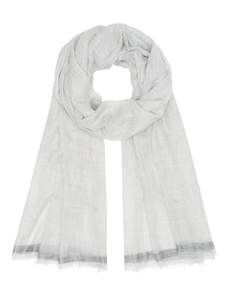
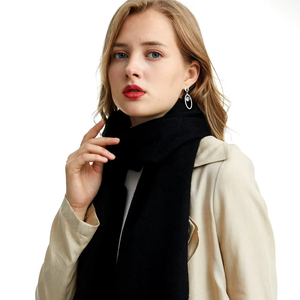
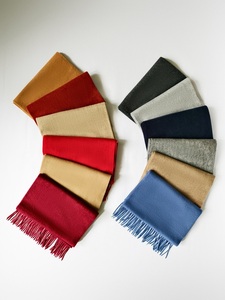
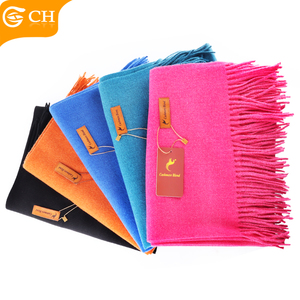
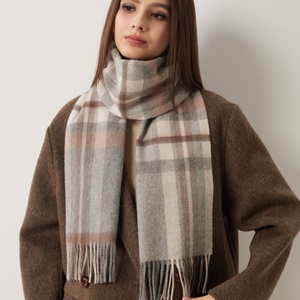
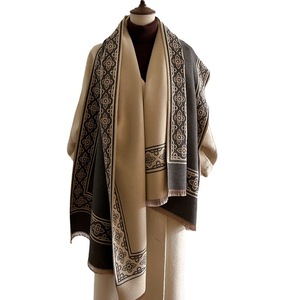
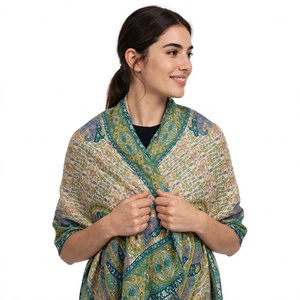
In the evolving landscape of international luxury textile trade, procuring CE Certified Custom Embroidered Wool Scarves requires strict adherence to physical safety, chemical safety, and mechanical consistency standards. Brand directors, procurement executives, and supply chain leads across North America, Europe, and the Middle East face mounting scrutiny regarding textile origin, yarn micron uniformity, embroidery needle density, and hazardous substance elimination under EU REACH Annex XVII mandates.
As an authoritative export manufacturing organization established in 2003, our Noida production complex integrates raw fiber selection, worsted spinning, high-precision automated Tajima embroidery, and an 8-Stage Quality Assurance Protocol. This whitepaper analyzes technical manufacturing metrics, global procurement trends for 2026–2030, custom embroidery mechanics on high-loft wool substrates, and enterprise compliance protocols required for private label fashion labels.
Information Gain Insight: Genuine CE compliance in luxury woolen accessories extends beyond basic labeling. It requires absolute fiber purity (tested under ISO 17751-2), zero AZO dye migration, strict physical pull-test thresholds for decorative embroidery threads (>50N force), and verifiable traceability across every stage of processing.
To establish clarity for enterprise procurement departments, the table below delineates our standardized physical, mechanical, and chemical thresholds for custom embroidered wool and cashmere scarf manufacturing:
| Material Parameter | Worsted Australian Merino | Inner Mongolian Cashmere | Wool-Cashmere Melange | Compliance Test Standard |
|---|---|---|---|---|
| Fiber Diameter (Micron) | 17.5μm – 19.5μm Superfine | 14.5μm – 15.5μm Pure Grade A | 16.5μm Hybrid Blend | ISO 137 / IWTO-8-89 |
| Staple Length | 65mm – 80mm | 34mm – 42mm | 45mm – 60mm | IWTO-17-85 |
| Yarn Count (Nm) | 2/60Nm – 2/80Nm Worsted | 2/26Nm – 2/48Nm Ring Spun | 2/40Nm Woven/Knitted | ISO 2060 |
| Embroidery Stitch Density | 4.5 – 6.0 stitches/mm² | 3.8 – 5.0 stitches/mm² | 4.0 – 5.5 stitches/mm² | ASTM D3887 Standard |
| Color Fastness to Washing | Grade 4-5 (ISO 105-C06) | Grade 4-5 (ISO 105-C06) | Grade 4-5 (ISO 105-C06) | ISO 105 Series |
| Formaldehyde & Heavy Metals | <20 ppm (ND) | <20 ppm (ND) | <20 ppm (ND) | EU REACH / OEKO-TEX 100 |
Embroidery on fine wool and cashmere substrates presents distinct engineering challenges compared to woven cotton or synthetic polyester fabrics. The delicate nature of high-loft wool yarn makes it susceptible to fabric puckering, thread tension shearing, and fiber breakage if needle density and backing materials are improperly calibrated.
Utilizing industry-leading Wilcom embroidery digitizing suites, our software engineers convert brand logos into specialized stitch matrices. We apply dynamic density compensation to adjust stitch length according to wool elasticity.
To prevent fine embroidery stitches from sinking into high-pile cashmere or brushed wool, we utilize bio-degradable cold-water-soluble polyvinyl alcohol (PVA) topping films paired with soft-touch non-woven tearaway backings.
Our embroidery department deploys OEKO-TEX Class 1 certified 100% Madeira Viscose Rayon and ultra-smooth metallic threads. High tensile strength ensures zero thread shredding at operational speeds of up to 1,000 SPM.
The global luxury fashion industry is undergoing a structural shift driven by regulatory evolution, environmental accountability, and consumer demand for verified product origins. Commercial buyers must align their supply chains with four dominant trends defining the high-end scarf and shawl sector over the coming decade:
1. Traceable Responsible Wool Standard (RWS) & Animal Welfare Certification: Procurement divisions among leading European fashion conglomerates now mandate non-mulesed wool certification and farm-to-shelf traceability. Sourcing partners must provide digital chain-of-custody documentation verifying ethical sheep shearing and sustainable land management.
2. Low-Impact Waterless Dyeing & Zero-Chemical Finishing: Micro-encapsulated natural dyes and closed-loop liquid carbon dioxide (CO2) dyeing systems are replacing legacy chemical bath methods. Modern buyers prioritize suppliers capable of delivering vibrant melange hues while achieving zero liquid discharge (ZLD) effluent standards.
3. Micro-Batch Customization & Low-MOQ Production Agility: Inventory carrying costs have prompted brands to shift away from massive 5,000-piece single-color production runs. Modern manufacturers must support low MOQ private-label programs (100–300 pieces per design) with fast sample turnaround times (<7 business days).
4. Hybrid Blends: Cashmere-Silk & Superfine Wool Integration: Thermal versatility has positioned lightweight worsted wool and cashmere-silk blends as year-round essentials rather than strictly seasonal winter items. Digital printing on ultra-fine 2/80Nm wool yarn enables intricate artistic patterns without compromising drape or tactile softness.
Operating from our integrated manufacturing facilities in Noida, Uttar Pradesh, India, KK Fashion Exports provides complete vertical OEM/ODM solutions. Backed by 20+ years of export experience and trusted by global retail leaders (including MaxMara, Marella, Sfera, Parfois, Pepe Jeans London, and El Corte Inglés), our operations deliver technical manufacturing expertise.
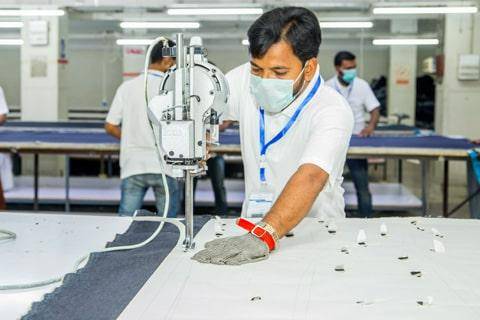
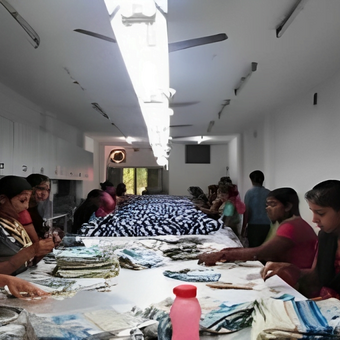
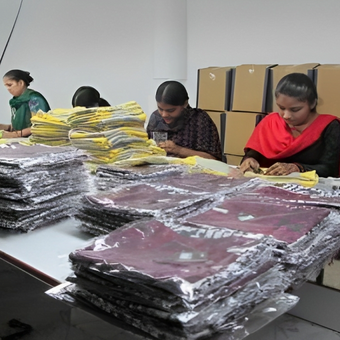



To eliminate defects and maintain strict compliance with European CE standards and ISO 9001 quality guidelines, every custom embroidered wool scarf production batch undergoes eight mandatory inspection gates:
Spectrophotometric color matching, fiber composition lab verification, and weight GSM measurement prior to cutting or embroidering.
Verification of embroidery stitch density, backing placement, edge hem stitching, and dimensional tolerance against client spec sheets.
Continuous automated tension monitoring across Multi-Head Tajima machines to prevent thread loops or substrate puckering during high-speed runs.
Lead-free, nickel-free metal badge and woven brand label testing to ensure complete REACH Annex XVII compliance.
Inspection of edge finishes, hand-knotted tassel uniformity, pin hem straightness, and corner construction.
Specialized automated thread vacuum trimming to eliminate loose embroidery tails without damaging surrounding wool fibers.
100% conveyorized metal detection scan passing all finished items through high-sensitivity sensors to guarantee complete safety.
AQL 2.5 random sampling inspection covering individual polybag labeling, barcode accuracy, moisture-absorbent silica gel placement, and master carton drop tests.
Below are authoritative responses to common technical inquiries encountered during enterprise contract negotiations for custom embroidered wool and cashmere scarves:
Partner with India’s leading SMETA-audited, CE-compliant garment exporter. Access over 3,000 ready woven patterns, custom embroidery swatches, and factory-direct pricing for your private label line.