

Manufacturers of Scarves, Shawls, Garments & Fashion Accessories from India  |  About Us  |  Contact Us
Garment Manufacturing & Apparel Industry Blog
Apparel Manufacturing & Export Insights
Textile Sourcing & Quality Control Blog

Industry Insights & Manufacturing Knowledge

Garment Manufacturing & Apparel Export Blog

Expert guides, textile sourcing strategies, quality assurance tips, and international export trends from KK Fashion Exports.

0%

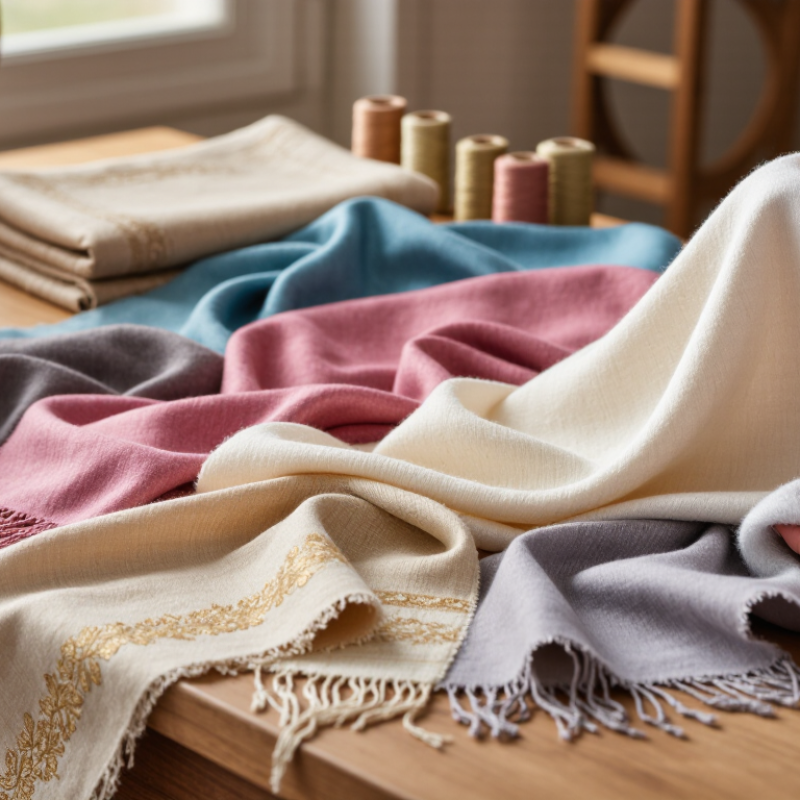
For global buyers, selecting among top Pashmina Shawls Export suppliers requires more than comparing prices. A beautiful shawl may show hand embroidery, soft fringes, and a gentle natural sheen. Yet appearance alone cannot confirm fiber quality, origin, or responsible production. This guide introduces leading exporters and practical signals that separate dependable partners from attractive but uncertain listings. It considers sourcing experience, weaving capacity, product consistency, documentation, and communication.

Textile researcher Dr. Shafiq Ahmad, who has studied Kashmir’s pashmina traditions, says, “A genuine pashmina story begins with the fiber, not the label.” His point remains useful for international procurement. Buyers should request fiber details, sample measurements, care instructions, and independent test reports where appropriate. They should also examine whether an exporter explains the goat-fiber origin, spinning method, dyeing process, and artisan involvement clearly. Strong suppliers welcome these questions. They do not hide behind luxurious photographs.

The best Pashmina Shawls Export companies combine heritage skills with modern export discipline. They provide stable packaging, accurate invoices, realistic lead times, and responsive after-sales support. Ethical sourcing matters too, including fair artisan treatment and clear material claims. No supplier is perfect. Even experienced buyers can overlook small inconsistencies between samples and bulk orders. That is why this overview encourages measured comparison, written specifications, and staged purchasing. A trusted exporter should deliver warmth, softness, and confidence together.
Top Pashmina Shawls Exporters for Global Buyers

Pashmina Shawl Production Regions and Exporting Traditions

Top Pashmina Shawls Exporters for Global Buyers

Pashmina production begins in the high-altitude Himalayan belt. Ladakh remains a major source of Changthangi goat fiber, while Kashmir is renowned for spinning, weaving, and embroidery. The Textile Exchange Materials Market Report 2024 estimates global cashmere fiber output at roughly 25,000 tonnes annually. True pashmina represents only a small, specialized share of that volume. The distinction matters.

Kashmir’s exporting tradition is deeply craft-based. Artisans sort fine underfleece, remove coarse hair, hand-spin delicate yarn, and weave it on traditional looms. A finished shawl may pass through several workshops before inspection and packing. Srinagar remains an important production and trading center. Nepal also contributes skilled handloom production, especially for lightweight wraps and dyed textiles. However, origin claims can be unclear when fiber, weaving, and finishing occur in different regions.

Trade data requires careful reading. ITC Trade Map records shawls under broad HS 6214 categories, which combine pashmina, cashmere, wool, and other fibers. These figures cannot prove pashmina content. Global buyers should request fiber testing, production records, and clear origin documentation. India’s Geographical Indication framework supports verification for Kashmir Pashmina products, but paperwork still needs practical review. Some suppliers describe every soft shawl as pashmina. That is an uncomfortable weakness in the market. Physical inspection, laboratory testing, and transparent craft records remain more reliable than elegant descriptions.

Key Materials and Standards Used in Export-Quality Pashmina

Export-quality pashmina begins with measurable fiber properties, not a romantic label. The key materials are exceptionally fine cashmere fibers, usually around 12–16 microns, with sufficient length for strength and smooth spinning. Short fibers and coarse guard hair can create shedding, fuzz, and uneven warmth.

The Sustainable Fibre Alliance estimates global cashmere production at roughly 15,000–20,000 tonnes annually. That volume remains tiny beside the 124 million tonnes of global fiber production reported by Textile Exchange’s Materials Market Report 2024. This scarcity makes traceability important. Exporters should document fiber origin, dehairing, spinning, dyeing, and final inspection. Country-of-origin records matter.

Testing should follow recognized methods. ISO 17751 supports microscopic identification and quantitative analysis of cashmere, wool, and other animal-hair fibers. Buyers should request fiber composition, average diameter, length, colorfastness, fabric weight, and dimensional stability results. A warm ivory shawl may feel luxurious, yet appearance cannot verify purity. Laboratory evidence can.

Hand-finishing still affects quality. Look for closely aligned fringes, even weaving, and a clean, dry handle. Manufacturing variation remains a real weakness. Two shawls from one shipment may not perform identically. I would treat unusually low prices carefully, especially when reports omit test methods, blend percentages, or lot numbers.

Top Pashmina Shawls Exporters for Global Buyers - Key Materials and Standards Used in Export-Quality Pashmina
Major Exporting Region Key Material Profile Common Export-Quality Parameters Typical Manufacturing and Finishing Relevant International Standards and Regulations Common Buyer Documentation
India
Kashmir and other established textile centres
Fine cashmere fiber obtained from the undercoat of cashmere goats. Premium shawls may use 100% cashmere, while some commercial products use cashmere blended with silk or fine wool. Fine, soft handle; even yarn; low visible contamination; consistent color; secure edges; and controlled dimensional change after washing. Fiber diameter for fine cashmere is commonly around 12–16.5 micrometres, although specifications vary. Hand spinning or machine spinning, hand weaving or power weaving, embroidery, brushing, washing, steaming, calendaring, and hand-finishing. Natural colors may be combined with dyed shades. Fiber-content declaration under the destination market’s textile-labeling rules; ISO 17751-1 or ISO 17751-2 for cashmere identification; colorfastness and dimensional-change testing according to the buyer’s specification; restricted-substance controls where required. Commercial invoice, packing list, certificate of origin, fiber-composition test report, colorfastness report, and shipping or customs documents.
Nepal
Traditional handloom and artisan production areas
Cashmere, often used in pure or blended constructions. Silk, wool, and viscose may be included in products described as blends, but the fiber percentages should be stated separately. Softness, yarn regularity, balanced weave, clean selvedges, secure fringes, and stable dimensions. A transparent fiber-content declaration is more important than the marketing use of the term “pashmina.” Hand weaving, hand spinning, printed or woven patterns, embroidery, fringe making, washing, pressing, and manual inspection. Small-batch variation may occur in artisan production. ISO 17751 methods can support cashmere-fiber identification. Textile labels should identify actual fiber composition and country of origin in accordance with the importing market. Chemical restrictions may apply under EU REACH or equivalent national rules. Certificate of origin, commercial invoice, packing list, material declaration, inspection report, and test reports requested by the importer.
Mongolia
Raw-fiber and cashmere-processing supply chain
Cashmere sourced from the fine undercoat of local cashmere goats. Export materials may include dehaired fiber, tops, yarn, knitted fabric, and finished shawls. Important controls include fiber fineness, fiber-length distribution, cleanliness, color classification, moisture condition, and the proportion of guard hair. Finished shawls should also be checked for pilling, holes, stains, and shade variation. Sorting, dehairing, washing, carding, combing, spinning, weaving or knitting, dyeing, and finishing. Industrial processing normally provides more uniformity than unstandardized hand sorting. ISO 17751-1 microscopy and ISO 17751-2 scanning electron microscopy may be used to distinguish cashmere from other animal fibers. Buyers commonly specify maximum guard-hair content, fiber diameter, and test conditioning requirements. Fiber test report, lot or batch identification, certificate of origin, packing list, commercial invoice, and quality-inspection record.
China
Large-scale cashmere processing and textile manufacturing
Cashmere fiber, yarn, woven fabric, and finished shawls. Products may be pure cashmere or blends containing silk, wool, cotton, or synthetic fibers; the blend must be declared accurately. Export specifications commonly cover fiber composition, yarn count, fabric weight, width, color difference, pilling resistance, tensile or tear performance, shrinkage, and appearance grading. Mechanized dehairing, spinning, weaving, dyeing, brushing, raising, anti-pilling finishing, steaming, and final inspection. Batch-based production can provide consistent shade and measurements. ISO 17751 methods for cashmere identification; destination-market textile labeling; colorfastness, pilling, and dimensional-change methods specified by contract; applicable chemical and product-safety requirements. Technical data sheet, pre-shipment inspection report, fiber-composition report, certificate of origin, commercial invoice, packing list, and compliance declaration.
Iran and Central Asian Supply Chains
Regional fiber, yarn, and artisan textile production
Cashmere may be combined with fine wool, silk, or other fibers depending on the product. The exact percentage of each fiber should be verified through documentation or laboratory testing. Buyers generally assess softness, fiber identity, yarn uniformity, colorfastness, weave density, finishing quality, fringe security, and the absence of holes, stains, and excessive loose fibers. Handloom or small-scale mechanized weaving, natural or synthetic dyeing, embroidery, washing, pressing, and manual finishing. Production consistency should be confirmed through a representative sample. Cashmere identification may be supported by ISO 17751 testing. Importers should apply the labeling, customs, product-safety, and restricted-substance requirements of the destination country. Material declaration, certificate of origin, commercial invoice, packing list, inspection certificate, and any destination-specific customs or compliance documents.
All Exporting Regions Genuine cashmere comes from the fine undercoat of cashmere goats. “Pashmina” is widely used commercially, but it is not by itself a universal international fiber-grade definition. A reliable specification should identify fiber composition, fiber fineness, yarn or fabric construction, dimensions, weight, color, allowable tolerances, pilling performance, shrinkage, and defect limits. Quality depends on sorting, dehairing, spinning, weaving, dyeing, washing, drying, brushing, pressing, and final inspection. Care labeling should match the actual finishing and fiber composition. ISO 17751-1 and ISO 17751-2 are relevant for identifying cashmere and other animal fibers. In the European Union, Regulation (EU) No. 1007/2011 governs textile-fiber names and labeling. In the United States, textile labeling requirements are administered under the Textile Fiber Products Identification Act and related rules. Purchase specification, approved sample, laboratory test report, certificate of origin, commercial invoice, packing list, care-label artwork, and pre-shipment inspection report.
Note: Fiber diameter, blend ratio, construction, colorfastness, pilling, and dimensional-change limits should be agreed in writing before production. “Pashmina” should not replace a precise fiber-composition declaration.

How to Evaluate Reliable Pashmina Shawl Exporters

Top Pashmina Shawls Exporters for Global Buyers

Reliable pashmina shawl exporters should prove quality, origin, and consistency before discussing price. Textile Exchange’s Materials Market Report 2024 recorded 124 million tonnes of global fiber production in 2023. Cashmere remains a very small, specialized segment. Therefore, impressive volume claims deserve careful checking. Ask for fiber-composition reports from an independent laboratory. A genuine specification should identify cashmere or fine animal hair, percentage content, yarn count, and testing methods. Also compare the sample with the production batch. Softness alone is not proof.

Check the exporter’s documentation and operating habits. Request business registration details, factory or workshop photographs, production capacity, packing standards, and recent shipment references. International Trade Centre Trade Map data for HS 6214 can help compare declared shawl trade patterns with an exporter’s claims. The comparison is not perfect, because customs codes combine several shawl materials. Still, unusual inconsistencies should invite questions. I would also request a pre-shipment inspection, especially for large orders. Small defects often appear near hems, tassels, and hand-finished edges.

Tips: Start with a paid sample. Confirm dimensions after washing or steaming. Ask whether the color is batch-consistent. Require a written tolerance for size, weight, and fiber content. Keep all approvals in one document. A reliable exporter accepts reasonable verification, even when it slows the first order. Do not rely on elegant packaging. That is easy to arrange. Traceability is harder, and sometimes incomplete, so buyers should record what remains unverified.

Major Export Markets and International Buyer Requirements

Top Pashmina Shawls Exporters for Global Buyers

India, Nepal, and Mongolia remain important supply bases for pashmina and fine cashmere shawls. Exporters targeting Europe, the United States, Japan, and the United Arab Emirates should study customs data, not assumptions. ITC Trade Map and UN Comtrade classify many shawls under HS 6214, covering shawls, scarves, and similar accessories. These records help buyers compare shipment values, destination demand, and supplier consistency.

Textile Exchange’s Materials Market Report 2024 places cashmere below 0.1% of global fibre production. This small share increases the value of traceability. International buyers commonly request fibre-composition reports, origin documents, colorfastness results, and restricted-substance testing. European customers also expect compliant textile labels under Regulation (EU) No 1007/2011. US buyers typically require clear fibre and country-of-origin disclosures under Federal Trade Commission rules. Japanese and Gulf buyers may focus more on finishing, presentation, seasonal colors, and dependable delivery. Customs classification can still vary. That needs careful review.

Tips: Ask exporters for a recent laboratory report, production photographs, sample measurements, and a packing list before ordering. Check whether “pashmina” describes verified fine cashmere or only a marketing term. A low price may hide weaker yarn, loose weaving, or uncertain origin. Even experienced buyers sometimes accept attractive samples too quickly. Require a pre-shipment inspection, but remember that inspection cannot repair poor sourcing records. Supplier audits, batch references, and written tolerances make negotiations clearer.

Ordering, Certification, Shipping, and Import Considerations

Global buyers should assess pashmina shawl exporters through samples, documents, and responsive communication. Request a sample showing weave, edge finishing, weight, dimensions, and color consistency. Ask for proof. Compare quoted fiber content with an independent laboratory report. “Pashmina” is not standardized legally everywhere. Experienced suppliers should explain yarn origin, processing methods, tolerances, and production capacity clearly. Avoid vague luxury claims. A written specification should cover fiber percentage, GSM, size, dye performance, packaging, payment milestones, and defect handling.

Certification requirements depend on the destination, product claims, and trade route. Request commercial invoices, packing lists, certificates of origin, test reports, and required textile labeling documents. For sustainable, handmade, or animal-welfare claims, ask who issued each certificate and what it verifies. A logo alone is not evidence. Check the exporter’s registration details and previous shipping experience. When practical, verify certificates with the issuing authority. I would not rely on a scanned certificate alone. Documents may be outdated, incomplete, or linked to another shipment.

Before ordering, agree on Incoterms, delivery time, freight method, insurance responsibility, and customs clearance. Confirm the HS classification with a licensed customs broker. Shawl composition and construction can affect duties. Importers should check destination rules for labels, restricted dyes, packaging materials, and textile safety tests. Use moisture-resistant inner wrapping and sturdy cartons. Carton counts must match the packing list. Inspect goods before dispatch when possible. Delays happen. Build a realistic buffer for sampling, holiday closures, port congestion, and customs questions. A small trial shipment is safer than an untested production run.

FAQS

Where does pashmina shawl production usually begin?

Production begins in high-altitude Himalayan regions. Fine goat underfleece is collected, sorted, spun, woven, and finished by skilled artisans.

Why can origin claims be difficult to verify?

Fiber collection, spinning, weaving, embroidery, and finishing may happen in different regions. A beautiful label does not prove one origin.

Can trade statistics confirm genuine pashmina content?

Usually not. Broad textile categories may combine pashmina, cashmere, wool, and other fibers. Trade data needs laboratory evidence.

What should buyers request before placing an order?

Request samples, fiber percentages, dimensions, weight, GSM, weave details, colors, and defect-handling terms. Ask for production records.

How can buyers check fiber claims?

Compare the supplier’s written specification with an independent laboratory report. Physical inspection also helps, but it is not perfect.

Which documents are useful for an international shipment?

Request invoices, packing lists, origin documents, textile test reports, and required labeling papers. Check dates and shipment references carefully.

Are certificates automatically reliable?

No. Confirm the issuer, scope, and validity period. A scanned certificate may be outdated or connected to another shipment.

What shipping details should buyers agree on?

Confirm delivery time, freight method, insurance, customs responsibility, and trade terms. A licensed customs broker should review the product classification.

How should shawls be packed for transportation?

Use moisture-resistant inner wrapping and sturdy cartons. Carton quantities must match the packing list. Small trials help.

Why is a trial shipment safer?

It reveals color variation, weave quality, sizing errors, packaging weakness, and delivery delays before a larger production run. Problems still happen.

Conclusion

Pashmina Shawls Export connects traditional craftsmanship with the requirements of modern international trade. Major production regions are known for skilled handweaving, careful fiber selection, and long-established exporting traditions. Export-quality shawls generally use fine natural fibers, balanced weaving, secure finishing, and consistent standards for softness, warmth, colorfastness, dimensions, and labeling. Buyers should evaluate exporters by reviewing product specifications, sample quality, production capacity, communication, documentation, and their ability to maintain reliable quality across large orders.

International markets may require different standards for fiber descriptions, origin information, packaging, testing, and customs paperwork. Before placing an order, buyers should confirm pricing, minimum quantities, lead times, payment terms, inspection procedures, and replacement policies. Proper certification and accurate commercial documents can support smooth customs clearance, while suitable packaging and shipping arrangements help protect delicate shawls during transit. Understanding import duties, labeling rules, sustainability expectations, and destination-country regulations enables buyers to choose dependable exporters and build stable, transparent trade relationships.


Elara

Elara

Elara is a highly skilled marketing professional dedicated to helping businesses understand the value, performance, and practical applications of our company’s products. With a strong background in market research, content strategy, customer communication, and product education, Elara transforms......