Manufacturers of Scarves, Shawls, Garments & Fashion Accessories from India  |  About Us  |  Contact Us
Garment Manufacturing & Apparel Industry Blog
Apparel Manufacturing & Export Insights
Textile Sourcing & Quality Control Blog

Industry Insights & Manufacturing Knowledge

Garment Manufacturing & Apparel Export Blog

Expert guides, textile sourcing strategies, quality assurance tips, and international export trends from KK Fashion Exports.

0%

China’s knitted textile industry has become an important sourcing destination for warm, practical, and visually distinctive winter accessories. This introduction examines China’s top Knitted Winter Scarves manufacturers through production experience, material control, design capability, and export reliability. It considers factories producing rib-knit, cable-knit, jacquard, fleece-lined, cashmere-blend, and recycled-fiber scarves for private-label brands and wholesalers.

A reliable manufacturer should offer more than attractive samples. Buyers need clear fiber compositions, stable sizing, colorfastness testing, transparent minimum order quantities, and consistent communication. Factory visits, independent inspections, and sample approvals can reveal details that catalogs hide. Loose edges, uneven tension, and scratchy yarn often appear only after repeated handling. Small details matter.

Fashion sustainability expert Orsola de Castro has said, “The most sustainable garment is the one already in your wardrobe.” Her statement reminds buyers to examine durability, repairability, and realistic product demand. These concerns apply directly to Knitted Winter Scarves. A cheap scarf may become expensive when returns, defects, and excess inventory accumulate.

This guide compares Chinese manufacturers by machinery, yarn sourcing, customization, certifications, production capacity, and service quality. Some suppliers may excel at complex patterns but struggle with small orders. Others may offer flexible development but limited testing resources. No factory is perfect. Careful evaluation remains necessary.

The strongest partnerships usually develop through clear specifications, physical samples, written quality standards, and honest timelines. Warmth is expected. Reliability must be demonstrated.
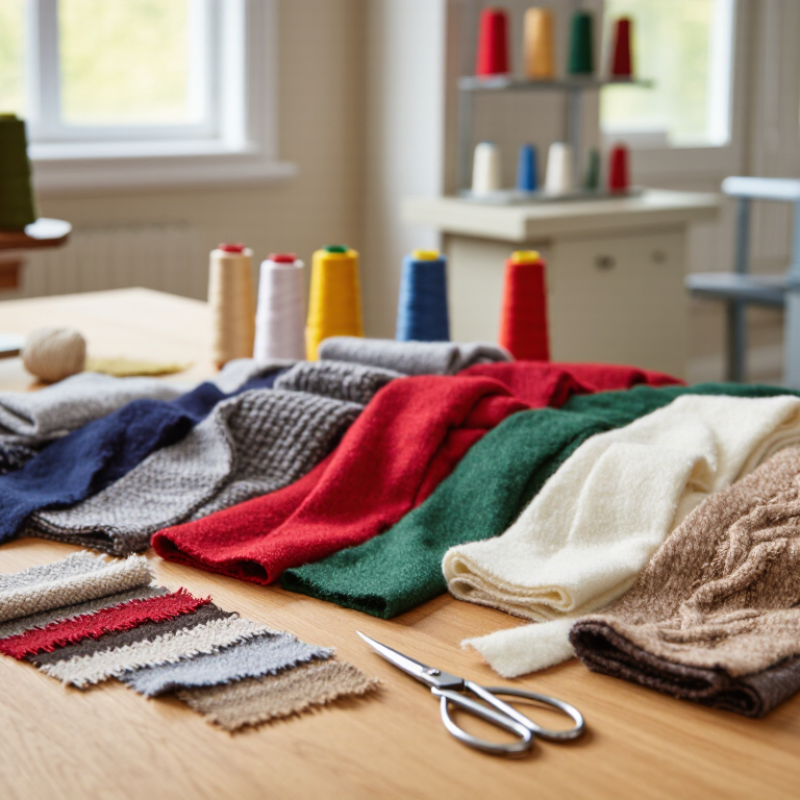
China Top Knitted Winter Scarves Manufacturers?

What Makes China a Leading Source of Knitted Winter Scarves?

China is a leading source of knitted winter scarves because its textile supply chain is broad and highly coordinated. Yarn suppliers, knitting workshops, dyeing facilities, and packaging teams often operate within connected industrial regions. This reduces communication gaps and helps control production schedules. Buyers can request wool blends, acrylic yarn, ribbed textures, cable patterns, or lightweight thermal knits. Many factories also support private labels and small design adjustments.

Production experience matters when scarves must feel warm without becoming heavy. Skilled technicians check yarn tension, stitch density, edge stability, and color consistency during knitting. Reliable manufacturers use sample approval, in-process inspections, and final measurements before shipment. They can also provide material details, care instructions, and testing documents when required by the target market. These practices help importers assess quality instead of trusting attractive photographs alone.

Details matter most.

China’s advantage is not simply low pricing. It comes from manufacturing scale, flexible equipment, experienced workers, and access to varied raw materials. However, quality is not identical across every supplier. Some samples look excellent but reveal loose stitches after washing. Buyers should compare physical samples, inspection records, lead times, and communication quality. A careful supplier may ask difficult questions about climate, packing, and expected use. That is encouraging, although occasional mistakes still happen. A transparent review process remains essential when selecting a dependable knitted winter scarf manufacturer.

How to Identify China’s Top Knitted Winter Scarf Manufacturers

How to Identify China’s Top Knitted Winter Scarf Manufacturers

A reliable supplier should prove capability, not merely display attractive product photos. Request factory videos, production records, and recent export documentation. Check whether knitting machines match your requirements for rib, cable, jacquard, or brushed textures. A useful factory visit includes yarn storage, sampling rooms, stitching lines, and final inspection areas. Dusty cartons or mixed yarn lots deserve attention.

Textile Exchange’s Materials Market Report 2024 states that global fiber production reached 124 million tonnes in 2023. This scale increases the importance of traceable yarn sourcing. Ask manufacturers for fiber composition records, recycled-content evidence, and certificates from recognized testing organizations. For winter scarves, test dimensional stability, colorfastness, pilling, and seam strength after washing. One sample is not enough. Test different colors and production batches.

Production capacity must be measured carefully. Ask for monthly output by scarf type, not total factory capacity. Review lead times for sampling, bulk knitting, inspection, and packing. The OECD Due Diligence Guidance recommends risk-based supply-chain checks, which can include labor, environmental, and material documentation. I would also compare three suppliers using the same technical sheet. Price alone often hides weaker yarn or rushed finishing. Even experienced buyers miss this. A neat showroom can distract from inconsistent bulk quality. Ask uncomfortable questions, record the answers, and verify them against physical samples.

China Top Knitted Winter Scarves Manufacturers? - How to Identify China’s Top Knitted Winter Scarf Manufacturers

Evaluation Dimension Reliable Benchmark or Data Point Documents or Evidence to Request Why It Indicates Manufacturer Quality
Knitting Capability Ability to produce plain knit, rib knit, cable knit, jacquard, intarsia, and double-layer scarf constructions. Recent product samples, machine list, knitting specifications, and production photographs. A wider technical range supports customized designs, consistent texture, and better control of winter-weight products.
Fiber Composition Common options include acrylic, wool, recycled polyester, nylon, viscose, cotton, and blended yarns. The exact percentage should match the approved specification. Yarn composition records, supplier declarations, and independent fiber-content test reports. Verified fiber content reduces labeling risks and helps buyers select the required warmth, softness, durability, and price level.
Dimensional Accuracy Sample measurements should be checked against the approved size chart for length, width, fringe length, and weight, with agreed tolerances. Pre-production sample, measurement report, approved specification sheet, and final inspection records. Consistent dimensions improve packing efficiency, customer satisfaction, and repeat-order reliability.
Color Consistency Color should be evaluated against an approved physical standard or recognized color reference under controlled lighting. Lab dips, color approval records, yarn lot information, and bulk-production shade reports. Color variation between lots is a common apparel quality issue and can create costly claims or rework.
Pilling Resistance Require a pilling test using the buyer’s target method and performance grade; results must be interpreted according to the applicable test standard. Third-party laboratory report, test method, number of cycles, and rating photographs. Pilling resistance is especially important for soft synthetic and blended knitted scarves exposed to friction.
Colorfastness Check colorfastness to rubbing, washing, perspiration, and light when required by the destination market. Test reports stating the test method, rating scale, fabric composition, and sample identification. Good colorfastness helps prevent dye transfer, fading, and consumer complaints during normal use.
Factory Quality System Documented incoming-material inspection, in-process checks, final inspection, defect classification, and corrective-action procedures. Quality manual, inspection checklist, corrective-action records, and recent audit report. A repeatable quality system is more dependable than relying only on a visually attractive sample.
Compliance and Chemical Safety The factory should understand the chemical and product-safety requirements of the intended sales market, including restricted-substance controls. Relevant laboratory reports, restricted-substance policy, material declarations, and compliance questionnaire. Market-specific compliance reduces customs, legal, safety, and retail listing risks.
Order Flexibility Minimum order quantities vary by yarn, color, pattern complexity, and production schedule; smaller quantities are usually easier for standard designs than custom jacquards. Written MOQ by style and color, setup charges, sampling fees, and re-order terms. Transparent order conditions help buyers evaluate whether the supplier fits their launch and replenishment strategy.
Sampling and Development A professional supplier should provide a development sample, confirm yarn and measurements, and document revisions before bulk production. Sample timeline, sample approval form, technical pack comments, and revised prototypes. Clear development control reduces differences between the approved sample and the delivered order.
Production Lead Time Lead time depends on yarn availability, order quantity, design complexity, and seasonal capacity. Require a written schedule rather than a general promise. Capacity plan, production calendar, yarn booking confirmation, and shipment milestone schedule. Reliable scheduling is critical for autumn and winter launches, when factory capacity can become constrained.
Traceability The supplier should be able to trace yarn lots, production dates, inspection results, and packing quantities for each order. Lot-control records, production batch number, carton packing list, and shipment inspection report. Traceability makes it easier to investigate defects and manage repeat orders consistently.
Packaging and Labeling Packaging should protect the knitted surface from moisture, dust, compression damage, and snagging during storage and transport. Packaging specification, carton dimensions, care-label artwork, fiber-content label, and barcode requirements. Correct packaging and labeling support product protection, warehouse handling, and destination-market compliance.
Pre-Shipment Inspection Inspection should cover appearance, dimensions, workmanship, color, quantity, labeling, packaging, and randomly selected cartons. Independent inspection report, defect photographs, sampling plan, and corrective-action confirmation. An independent final check provides objective evidence before the goods leave the factory.
Communication and Export Experience The supplier should respond clearly to technical questions, confirm changes in writing, and provide export documents accurately and on time. Quotation, proforma invoice, packing list, commercial invoice, shipping records, and documented communication history. Strong communication lowers the risk of specification errors, shipment delays, and misunderstandings across languages and time zones.

Note: Benchmarks should be finalized according to the scarf design, fiber composition, destination-market regulations, and the buyer’s approved technical specification.

Key Materials and Production Methods Used by Chinese Manufacturers

China’s top knitted winter scarf manufacturers usually work with wool, cashmere, cotton, acrylic, and recycled polyester. Each material changes warmth, softness, price, and care requirements. Wool provides natural insulation and breathability. Cashmere feels lighter and softer, but it requires careful fiber grading and controlled processing. Acrylic offers color stability and lower cost. Blended yarns can balance performance, although blends may complicate recycling.

Production often begins with computerized flat knitting or circular knitting machines. Flat knitting supports structured panels, ribbed edges, and detailed jacquard patterns. Circular knitting creates efficient tubular fabrics with consistent stretch. After knitting, factories may use linking, brushing, steaming, washing, and anti-pilling treatments. These steps affect the scarf’s handle and final dimensions. Small gauge changes can noticeably alter thickness.

Quality checks should cover yarn composition, colorfastness, dimensions, seam strength, and pilling resistance. Buyers should request test reports and confirm whether recycled fibers have credible documentation. Factory samples deserve close inspection after washing, not only before shipment. A soft scarf can still shed fibers. A beautiful pattern can lose shape. No material is perfect. Experienced manufacturers record machine settings, batch numbers, and finishing temperatures for better consistency. Yet production variation remains possible, especially with natural fibers, so realistic tolerances should be agreed before bulk knitting.

Custom Design, Quality Control, and Minimum Order Considerations

China Top Knitted Winter Scarves Manufacturers: Custom Design, Quality Control, and Minimum Order Considerations

Choosing a capable knitted winter scarf manufacturer requires more than checking catalog photos. Experienced buyers should review yarn composition, knitting density, edge finishing, and colorfastness before placing an order. Ask for physical samples, not only digital images. A scarf may look soft on screen but feel rough after several minutes against the neck. Custom designs should include clear measurements, stitch references, logo placement, and packaging requirements. Small changes can affect production speed and unit cost.

Quality control needs measurable checkpoints. Inspect yarn shade against an approved standard, then check dimensions after washing. A practical inspection may include loose threads, uneven ribbing, skipped stitches, stains, and label accuracy. Request a pre-production sample before bulk knitting begins. Keep one approved sample for comparison during final inspection. Good manufacturers should explain their inspection process and provide production updates. Still, no process is perfect. A sampling plan can miss defects, especially in large orders.

Minimum order quantity deserves careful negotiation. Some factories accept lower quantities for simple patterns, while complex jacquard designs may require more units. Ask whether the minimum applies per color, design, or total order. Confirm sample fees, mold or setup charges, lead time, and payment stages in writing. A lower MOQ may increase the price per scarf. That trade-off is easy to overlook. Start with a controlled trial order when demand is uncertain, then review defect rates, delivery consistency, and customer feedback before scaling production.

China Top Knitted Winter Scarf Manufacturers: Key Evaluation Priorities

A practical buyer benchmark covering custom design, quality control, and minimum-order considerations.

Quality control usually carries the greatest weight when evaluating knitted winter scarf suppliers, followed by custom design capability and minimum-order flexibility. Buyers should confirm sampling procedures, material specifications, inspection standards, production capacity, and MOQ terms before placing an order.

How to Select the Right Chinese Knitted Scarf Supplier

China Top Knitted Winter Scarves Manufacturers?

Selecting a Chinese knitted scarf supplier requires more than comparing catalog photos. Check factory experience, knitting capacity, export records, and product testing. Request a physical sample, not only digital images. A sample should show even stitches, clean edges, stable dimensions, and soft finishing after washing. Ask for the yarn composition and production batch details.

Material verification matters. Textile Exchange’s Materials Market Report 2024 estimates that polyester represented about 57% of global fiber production in 2023. Therefore, confirm whether a scarf uses polyester, recycled polyester, wool, acrylic, or blended yarn. For recycled claims, request recognized certification records and verify the certificate holder. Do not rely on a supplier’s brochure alone. Small details matter.

Audit the supplier before placing a large order. Review equipment maintenance, worker conditions, quality procedures, and carton storage. Ask whether inspections follow AQL sampling standards. Check colorfastness, pilling, shrinkage, seam strength, and needle safety. The International Trade Centre’s Trade Map data can help compare China’s export activity under relevant textile accessory codes. Yet trade volume does not prove factory quality. That is an easy mistake. Confirm MOQ, lead time, payment terms, and replacement rules in writing. Keep approved samples and inspection photos with the purchase order. A low price can become expensive when sizing changes, colors drift, or delivery slips. Supplier selection is never perfectly predictable. Allow time for a second sample.

FAQS

Why is China a major source of knitted winter scarves?

China has connected yarn, knitting, dyeing, inspection, and packaging facilities. This coordination can shorten communication gaps and production delays.

What scarf materials can Chinese suppliers provide?

Common options include wool blends, acrylic, polyester, recycled polyester, and lightweight thermal yarns. Buyers can request ribbed, cable, jacquard, or brushed textures.

How can buyers check a supplier’s real manufacturing ability?

Request factory videos, production records, recent export documents, and physical samples. Review yarn storage, knitting machines, sampling rooms, and inspection areas.

What should a buyer inspect on a scarf sample?

Check stitch evenness, edge stability, softness, dimensions, color consistency, pilling, and seam strength. Wash the sample before approval.

Is one sample enough for quality verification?

No. Test several colors and production batches when possible. Different yarn lots may create noticeable shade or texture changes.

How should material claims be verified?

Request fiber composition records and supporting certification documents for recycled content. Compare the documents with the physical yarn and purchase order.

How can production capacity be measured accurately?

Ask for monthly output by scarf type, rather than total factory capacity. Confirm sampling, knitting, inspection, and packing lead times separately.

What supplier details should be written into the order?

Record MOQ, materials, dimensions, colors, delivery dates, payment terms, inspection rules, and replacement conditions. Keep approved samples and inspection photos.

Why should buyers compare several suppliers?

Comparing three suppliers with one technical sheet exposes differences in yarn quality, communication, lead time, and finishing. Low prices can hide problems.

Can supplier checks guarantee perfect bulk quality?

No checklist catches everything. A showroom may look clean while bulk scarves develop loose stitches after washing. Leave time for a second sample.

Conclusion

China has become a leading source of Knitted Winter Scarves because of its strong textile supply chain, skilled workforce, diverse material options, and efficient production capacity. Manufacturers commonly work with wool, acrylic, cotton, cashmere blends, and recycled fibers, using techniques such as flat knitting, rib knitting, jacquard patterns, and computerized production. This combination allows them to offer products in various weights, textures, colors, and designs for different markets and seasonal needs.

When identifying top Chinese knitted scarf manufacturers, buyers should evaluate production experience, sample quality, material transparency, factory capabilities, and communication efficiency. It is also important to discuss custom designs, labeling, packaging, quality-control procedures, production timelines, and minimum order quantities before placing an order. The right supplier should provide consistent workmanship, reliable inspections, flexible customization, clear pricing, and dependable delivery support. Comparing several qualified manufacturers and requesting samples can help buyers choose a long-term partner that balances quality, cost, and order flexibility.


Ethan

Ethan

Ethan is a seasoned marketing professional dedicated to helping businesses understand how thoughtful products, reliable service, and practical innovation can create lasting value. With a strong understanding of the company’s solutions, customer needs, and industry trends, he regularly contributes......