Industry Insights & Manufacturing Knowledge
Expert guides, textile sourcing strategies, quality assurance tips, and international export trends from KK Fashion Exports.
Cotton Handloom Scarves bring together natural fiber, skilled weaving, and everyday function. For global buyers, choosing well means looking beyond color and price. Fiber quality, weave consistency, finishing, and supplier transparency all matter. A soft scarf can still disappoint if its edges fray or its dimensions vary between orders.
Textile designer William Morris offered a useful standard: “Have nothing in your houses that you do not know to be useful, or believe to be beautiful.” His words suit a product meant to be worn, handled, and kept. Still, beauty alone is not enough. Buyers should ask how cotton is sourced, how the fabric is woven, and whether production details can be documented. Small checks matter.
This guide introduces ten Cotton Handloom Scarves for different markets and buying needs. It considers texture, pattern, construction, and practical use, from light wraps to more substantial everyday pieces. It also points to questions worth asking about colorfastness, dimensions, care instructions, and order consistency. Samples help, but one sample cannot represent every production run. That is easy to forget.
The aim is not to declare one scarf universally best. Instead, the guide offers a clear way to compare options and spot trade-offs. A handwoven irregularity may be part of the appeal; uneven finishing may be a concern. Buyers should judge both with care.
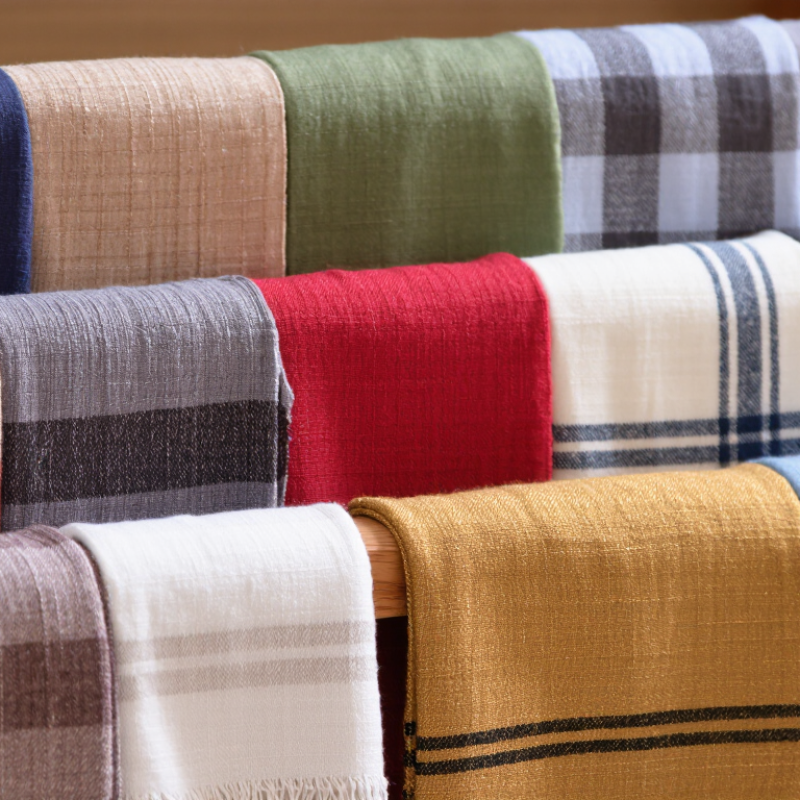
A cotton handloom scarf begins with natural cotton yarn and human-controlled weaving. Unlike fully automated fabric, it may show slight variations in texture, spacing, or edge alignment. These details often reveal the handloom process. They should not be confused with poor workmanship.
Feel the fabric first. A well-made scarf usually feels breathable, soft, and lightly textured against the skin. Cotton also absorbs moisture, making the scarf practical in warm climates. However, softness alone proves little. Excessive finishing can create a smooth surface that changes after washing.
Inspect the selvedges, hems, and color consistency. Secure edges should resist loose threads during normal handling. Small irregularities can add character. Large gaps or unstable yarns suggest production problems. Buyers should request fiber details, dimensions, washing instructions, and colorfastness information before placing bulk orders. A sample is essential.
Ask how the yarn was spun, where the fabric was woven, and how the scarf was finished. Reliable suppliers should answer clearly and provide consistent records. Testing may be useful for fiber content, shrinkage, and color performance. Even careful inspection has limits. One sample may not represent an entire shipment. I have seen attractive pieces lose shape after careless washing, so practical care guidance matters as much as appearance. A defined cotton handloom scarf combines material honesty, skilled weaving, functional comfort, and transparent quality checks.
Cotton handloom scarves begin with a decision: fiber, yarn, and intended use. Artisans often inspect raw cotton by touch, checking softness, strength, and uneven fibers. The cotton is cleaned, spun into yarn, and sometimes twisted for extra durability. It is then prepared on a loom, where threads called the warp are stretched lengthwise. The weft passes across them, one pick at a time. This rhythm is slow. It leaves character.
Before weaving, yarn may be dyed with approved colorants and dried fully to reduce bleeding. Skilled weavers watch tension constantly. A loose warp can create gaps, while excessive tension may produce a stiff scarf. Handloom work is not perfectly uniform, and that is part of its evidence. Still, professional makers should inspect edges, color fastness, dimensions, and stitching. Finishing can include washing, pressing, trimming, and careful folding. Buyers should request test reports when consistent shade and safety documentation matter. In my experience, small irregularities can feel authentic, but weak hems are simply defects.
Tips: Ask how the cotton was sourced and whether the yarn is combed or carded. Check the scarf after washing, not only under showroom lighting. Rub a hidden corner with a damp white cloth. Watch for color transfer. Confirm measurements, packaging, and acceptable variation before placing a bulk order. A sample can reveal more than a polished catalog. Leave room for learning; even experienced buyers sometimes judge softness too quickly.
Top 10 Cotton Handloom Scarves for Global Buyers
Global buyers should assess more than appearance when comparing the top ten cotton handloom scarves. Fiber content matters. Confirm whether the scarf uses 100% cotton or a blended yarn. Ask for fabric weight, dimensions, weave details, and production samples. A soft hand feel can be attractive, but it may not prove durability. Check seam finishing, edge tension, and color consistency under daylight. These small details often reveal production quality.
Reliable sourcing also requires clear documentation. Request test reports for colorfastness, shrinkage, and fiber composition where appropriate. Review care labels, packaging strength, lead times, and carton measurements before placing an order. Ethical production evidence should be specific, not vague. Suppliers should explain workshop conditions and material origins honestly. No checklist is perfect. Even experienced buyers can overlook uneven shrinkage after washing. A small sample test remains valuable.
Tips: Compare at least three samples before approval. Wash one scarf using the proposed care instructions. Measure it before and after washing. Check for bleeding on a white cotton cloth. Confirm labeling and import requirements for each destination market. Keep written specifications, approved samples, and inspection photos. Natural dyes may vary slightly between batches, so buyers should define acceptable differences. It is a detail worth discussing early.
Indicative procurement weighting based on commonly used textile sourcing considerations. The percentages represent the relative importance of each criterion in a buyer evaluation framework and total 100%.
For international buyers, authentic cotton content, weaving consistency, colorfastness, and dimensional stability are key quality factors. Traceability, flexible order quantities, dependable lead times, export-ready packaging, care labeling, and competitive pricing also support successful global purchasing decisions.
Global buyers can compare ten cotton handloom scarf types by structure, surface, and intended use. Plain-weave voile feels light and suits warm climates. Muslin offers softness and gentle breathability. Slub cotton adds visible yarn irregularities and a more tactile finish. Dobby scarves create small geometric textures through raised patterns. Jacquard handlooms produce richer motifs, but they usually require closer quality inspection. Ikat scarves show blurred resist-dyed designs, often with charming alignment variations. Block-printed cotton provides strong visual character and may show minor print shifts. Striped scarves are easy to coordinate for uniform retail collections. Checked scarves offer a practical, casual appearance. Embroidered or appliquéd scarves create a handmade focal point, though added labor raises costs.
Material choices deserve measurable checks. The USDA Cotton: World Markets and Trade report forecast global cotton production at roughly 116 million 480-pound bales for 2024/25. Textile Exchange’s Materials Market Report 2024 placed cotton near one-fifth of global fiber production in 2023. These figures indicate a large supply base, not automatic consistency. Ask for yarn count, fabric weight, finished dimensions, shrinkage testing, and colorfastness results. A 70–120 GSM scarf may suit summer markets, while 140–220 GSM feels more substantial. Inspect both sides under direct light. Look for skipped threads, uneven selvedges, and loose tassels. Some irregularity proves handwork. Too much becomes a return risk. I would also request a washed sample; paper specifications can still miss real-world softness and color change.
When comparing cotton handloom scarves, inspect the weave in daylight. Look for consistent spacing, secure edges, and a soft but substantial feel. Small irregularities are normal in handwoven cloth; loose threads or weak seams deserve closer attention. Feel the edge. Ask what the fiber label means, whether dyes or finishes were used, and how much shade variation to expect between batches. A dependable supplier should answer clearly and provide a sample or close-up photographs. Request details on the weaving location and production process, too. Claims about origin are useful only when they can be checked. One limitation: a polished sample may not represent every scarf in a larger order.
Care depends on the dye, finish, and weave, so follow the supplier’s instructions when available. For an unfamiliar scarf, test a small hidden area with cool water and mild detergent before washing the whole piece. Avoid harsh bleaching and vigorous wringing, which can stress the yarn and distort the shape. Dry it flat or over a clean line, away from strong direct sun. Store it clean and fully dry. Cotton can shrink, and some colors may fade; neither outcome is always predictable from a photograph. Ask for care guidance before buying, then keep it with the shipment records. That extra step is easy to overlook.
It is woven from cotton yarn using human-controlled looms. Slight texture or spacing variations can be normal.
Check the weave in daylight, then inspect edges, hems, and loose threads. Small irregularities are not always defects.
No. Finishing can make fabric feel smooth, but its texture may change after washing. Feel alone tells little.
Ask for fiber content, dimensions, fabric weight, weave details, washing instructions, and colorfastness information. Get them in writing.
One scarf cannot represent every piece in a large shipment. Compare several samples and wash one using the proposed care instructions.
Dampen a white cotton cloth and gently test a hidden area. Still, one small test cannot predict every washing outcome.
Follow the supplier’s instructions. For an unfamiliar scarf, test cool water and mild detergent on a hidden area first.
Cotton may shrink, while vigorous wringing can distort the weave. Dry the scarf flat or over a clean line.
Measure each scarf, inspect it in daylight, and compare edge tension and color consistency. Keep notes; memory is unreliable.
Cotton Handloom Scarves are valued for their natural softness, breathability, and the distinctive character created by manual weaving. This guide explains what sets them apart, from the selection of cotton yarns and preparation of threads to hand-operated weaving, finishing, and quality inspection. It also introduces ten practical scarf types, including lightweight everyday styles, textured weaves, patterned designs, and versatile seasonal options suitable for different markets and customer preferences.
For global buyers, the most important considerations include fabric weight, dimensions, color consistency, weave density, edge finishing, durability, and production capacity. The guide also highlights how to compare suppliers through transparent sourcing information, reliable sampling, consistent workmanship, and responsible production practices. Finally, it offers straightforward advice on care, such as gentle washing, suitable drying, careful ironing, and proper storage, helping buyers evaluate long-term value as well as appearance.