Manufacturers of Scarves, Shawls, Garments & Fashion Accessories from India  |  About Us  |  Contact Us
Garment Manufacturing & Apparel Industry Blog
Apparel Manufacturing & Export Insights
Textile Sourcing & Quality Control Blog

Industry Insights & Manufacturing Knowledge

Garment Manufacturing & Apparel Export Blog

Expert guides, textile sourcing strategies, quality assurance tips, and international export trends from KK Fashion Exports.

0%

What Are the Top Canvas Beach Bags for Wholesale in 2026? The answer depends on more than color or price. Wholesale buyers need bags that look appealing on a display, feel comfortable on the shoulder, and hold up after repeated trips to the shore. A neatly stitched seam matters. So does a handle that does not dig into the hand when the bag carries towels, sunscreen, and a water bottle.

Designer and textile artist William Morris offered a useful design principle: “Have nothing in your houses that you do not know to be useful or believe to be beautiful.” He was not speaking about beach bags, but the idea fits this category well. A strong wholesale choice should serve a clear purpose and earn its shelf space. Looks alone are not enough.

This guide compares Canvas Beach Bags by fabric feel, stitching, handle construction, capacity, print options, and wholesale practicality. It also considers whether a supplier can provide consistent samples and clear product details. Small differences can matter. A bag that looks roomy in a photo may feel awkward when packed, and a low unit price may not tell the full story. Some judgments remain subjective; buyers should test samples before placing a large order. The comparisons ahead aim to make that decision more grounded, not effortless.
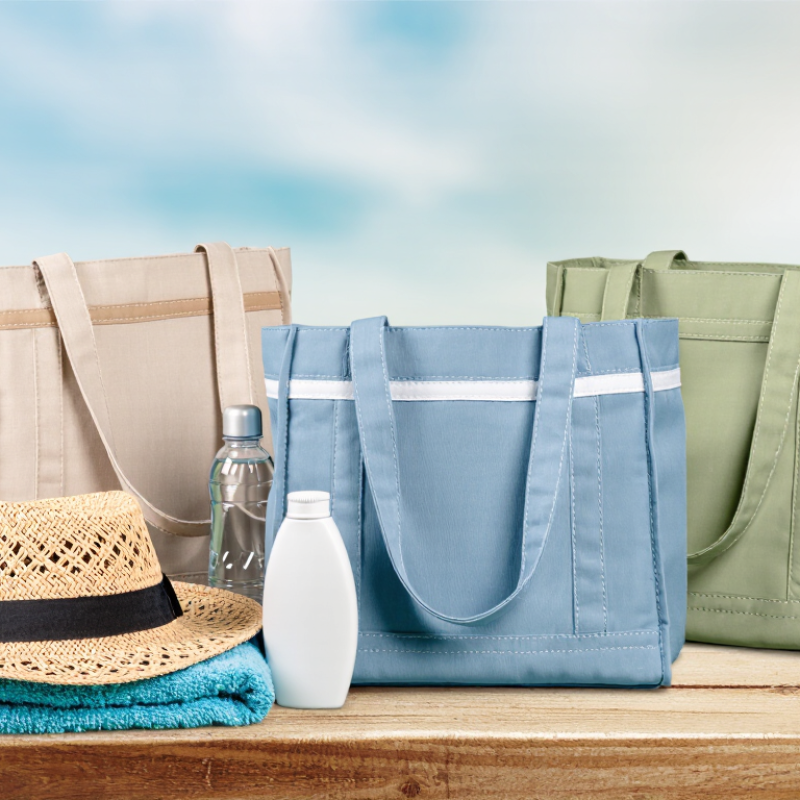
What Are the Top Canvas Beach Bags for Wholesale in 2026?

What Defines a Canvas Beach Bag? GSM, Weave, Capacity, and Construction

A canvas beach bag is a carryall made from woven cotton or blended canvas, designed for towels, swimwear, and everyday beach essentials. Fabric weight, measured in GSM, indicates grams per square meter. A range around 280–400 GSM often balances structure and manageable weight, though lining and weave also affect feel. More weight is not automatically better. A heavy bag can feel cumbersome when filled with damp towels.

Weave density influences durability and appearance. A tighter plain weave usually resists snagging better than a loose weave, while still feeling flexible. Check seams and fabric edges, not just the front panel. Pull gently at a sample’s side seam; loose stitches or puckering may signal inconsistent construction. Small details matter. Reinforced stitching at handle joins helps distribute the strain of bottles and books.

Capacity depends on both volume and shape. A wide base can keep a rolled towel flatter, while a deep, narrow design may swallow smaller items. For wholesale evaluation, compare stated dimensions with a sample packed with a towel, sunscreen, and a paperback. Measure handle drop, too; short straps can make a full bag awkward over the shoulder. A sample that looks sturdy on a table may sag when loaded, so testing a realistic load is worth the extra time.

Which Wholesale Styles Suit Buyers? Totes, Zip-Top, Insulated, and Foldable

For 2026 beach assortments, buyers can match bag styles to real shopping habits, not just seasonal colors. Grand View Research estimated the global reusable-bags market at USD 9.2 billion in 2023, with projected annual growth of 5.6% through 2030. That broad category is not canvas-only, but it signals sustained interest in reusable carry goods. Practical details still matter.

Open totes suit beach towels, sandals, and easy, visible access. Zip-top styles help keep keys and sunscreen inside when bags tip over in a car.

Insulated designs work for picnic food, but buyers should check lining thickness, leak resistance, and how easily seams can be cleaned. Foldable bags save shelf and shipping space. Small, neat, and useful. Yet thin handles can dig into a shoulder when a wet towel adds weight.

Textile Exchange reported global fiber production of 124 million tonnes in 2023, with polyester making up 57%. For canvas buyers, that wider material picture makes fiber content worth checking, especially in blended fabrics and linings.

Request fabric weight, handle reinforcement, zipper samples, and packed dimensions before confirming an order. Test a filled sample by lifting it and folding it repeatedly. A beautiful sample can still disappoint after a long day at the beach.

How to Compare Quality: ISO 13934-1 Strength and ISO 105-C06 Colorfastness

For wholesale canvas beach bags in 2026, compare test results, not just fabric weight or a supplier’s “heavy-duty” claim. ISO 13934-1 measures fabric tensile properties, including maximum force, with a strip method. Ask for results in both directions, since a loaded bag may strain across its base and side seams. Textile Exchange’s 2024 Materials Market Report estimated global fiber production at 124 million tonnes in 2023. That scale makes traceable material specifications useful, but it does not prove a particular bag is durable. Numbers help.

ISO 105-C06 assesses colorfastness to domestic and commercial laundering, including color change and staining. For beach bags, request the test conditions and results for the actual dyed fabric; shade, dye, and finishing can affect performance. A pale towel rubbing against a damp navy bag is a practical concern, though a laundering test does not fully replicate saltwater, sunscreen, or sunlight. I would still ask for a sample and check it after use.

Tips: Compare reports from the same laboratory method and fabric lot. Inspect handles, seams, and the base under load. Confirm that the tested fabric matches the production order, and request clear pass criteria before approving bulk quantities.

What Are the Top Canvas Beach Bags for Wholesale in 2026?

How to Compare Quality: ISO 13934-1 Strength and ISO 105-C06 Colorfastness

This chart shows the ISO grey-scale rating reference, not test results for specific bags. For ISO 105-C06, color change and staining are assessed on a scale from 1 (greatest change or staining) to 5 (least change or staining). ISO 13934-1 measures fabric tensile force using the strip method; compare results in newtons under the same test conditions, as the standard does not set a universal pass value.

How to Rank 2026 Options Using HS 4202 Trade Flows and Wholesale Cost Data

To rank canvas beach bags for wholesale in 2026, use HS 4202 trade flows as context, not a direct sales forecast. This broad customs heading covers multiple kinds of travel and carrying goods, so its import values may not isolate canvas beach bags. Compare shipment trends across several years and markets, then check whether the product descriptions actually match your target bags. Rising trade volume can signal supply activity, but it does not prove strong retail demand.

Pair that evidence with comparable wholesale quotes. Record the bag’s fabric weight, dimensions, lining, pocket count, handle reinforcement, minimum order quantity, and packaging. Include sample costs, freight, and applicable import charges before comparing unit prices. A low quote may reflect lighter canvas or simpler stitching. Ask suppliers for dated specifications and inspect a physical sample when possible. The ranking will still have gaps; trade data and quotes rarely describe identical products.

Tips: Build a simple scorecard for trade relevance, landed cost, and construction quality. Flag estimates separately from confirmed figures. A spreadsheet can help, but it cannot replace sample checks.

Which Buying Metrics Matter? MOQ, Unit Price, Lead Time, and Compliance

For wholesale canvas beach bags in 2026, compare more than the quoted unit price. Ask suppliers to price the same size, fabric weight, handle length, pocket layout, and print method. A low quote may exclude packaging or reflect thinner canvas. Request a pre-production sample and check its seams, stitching, and capacity with a real beach towel inside. Small details matter.

MOQ affects both cash flow and customization. A lower minimum can help test a new design, but may raise the per-bag cost. Ask whether the MOQ applies per color, print, or total order. Get the price tiers in writing, including any setup charges. Then compare landed costs, not just factory prices. Freight can shift the calculation.

Lead time should include sampling, production, inspection, and shipping—not just sewing days. Confirm the start point and ask what happens if artwork approval slips. For compliance, request current material and product documentation relevant to the destination market, and check that names, test scope, and product details match the bag. Documents can be incomplete. Review them carefully, and budget time for independent checks when needed. A spreadsheet helps, but it won’t catch every mismatch.

FAQS

What canvas weight works well for a beach bag?

Around 280–400 GSM can balance structure and manageable weight. A heavier bag may feel cumbersome when it holds damp towels.

Does a tighter weave make a bag more durable?

A tighter plain weave usually resists snagging better than a loose one. Check the fabric edges and seams, too. Small details matter.

How can I check handle and seam construction?

Inspect handle joins for reinforced stitching, then gently pull a side seam. Loose stitches or puckering may signal inconsistent construction. It is not a perfect test.

What should I pack to test a bag’s capacity?

Try a towel, sunscreen, and a paperback. Check whether the base stays supportive and whether smaller items disappear inside. Measure the handle drop, too.

Which beach bag style suits different needs?

Open totes give easy access to towels and sandals. Zip-top styles help contain small items if the bag tips. Insulated and foldable designs serve different needs.

What should buyers check in an insulated bag?

Check lining thickness, leak resistance, and how easily seams can be cleaned. A sample may look promising but still be awkward to clean.

What does ISO 13934-1 testing tell buyers?

It measures fabric tensile properties, including maximum force, using a strip method. Ask for results in both fabric directions. Numbers help, but they do not prove a whole bag’s durability.

How can I assess colorfastness before ordering?

ISO 105-C06 assesses color change and staining during laundering. Request results for the actual dyed fabric and its test conditions. Saltwater, sunscreen, and sunlight may affect it differently.

How should a sample be checked before a bulk order?

Lift it with a realistic load, inspect the handles and base, then fold it repeatedly. Confirm the tested fabric matches the production fabric. I would still check it after actual use.

Conclusion

Canvas Beach Bags for wholesale in 2026 should be assessed by more than appearance. Buyers can compare fabric weight in GSM, weave density, carrying capacity, stitching, handles, and reinforcement to judge whether a bag suits everyday beach use. Totes offer straightforward storage, while zip-top styles help secure belongings; insulated options serve buyers seeking temperature control, and foldable designs prioritize compact storage and shipping convenience.

A practical comparison also considers testable performance, including tensile strength measured under ISO 13934-1 and colorfastness assessed under ISO 105-C06. To rank options, buyers can review relevant HS 4202 trade-flow data alongside wholesale cost information, while treating market figures as indicators rather than guarantees of quality. Finally, compare minimum order quantities, unit prices at different volumes, production lead times, and applicable compliance documentation. A balanced scorecard across these factors can help wholesalers select Canvas Beach Bags that fit their customers, budget, and delivery schedule.

Elara

Elara

Elara is a highly skilled marketing professional dedicated to helping businesses understand the value, performance, and practical applications of our company’s products. With a strong background in market research, content strategy, customer communication, and product education, Elara transforms......