
Manufacturers of Scarves, Shawls, Garments & Fashion Accessories from India  |  About Us  |  Contact Us
Garment Manufacturing & Apparel Industry Blog
Apparel Manufacturing & Export Insights
Textile Sourcing & Quality Control Blog

Industry Insights & Manufacturing Knowledge

Garment Manufacturing & Apparel Export Blog

Expert guides, textile sourcing strategies, quality assurance tips, and international export trends from KK Fashion Exports.

0%

Buying a scarf for warm weather seems simple, but the details quickly become practical decisions. Fabric, size, dye quality, edge finishing, and personalization all affect comfort and durability. This guide, “10 Tips for Buying Custom Women Summer Scarves,” focuses on those details before appearance takes over.

The market is moving toward individuality and more responsible purchasing. Grand View Research estimates that the global scarves market will continue growing through 2030, supported by fashion accessories and online retail demand. Textile Exchange’s Materials Market Report 2024 also reports that global fiber production reached about 124 million tonnes in 2023. That figure makes material selection harder to ignore. Lightweight linen, organic cotton, recycled polyester, and silk blends can feel very different against warm skin. They also carry different care and environmental considerations.

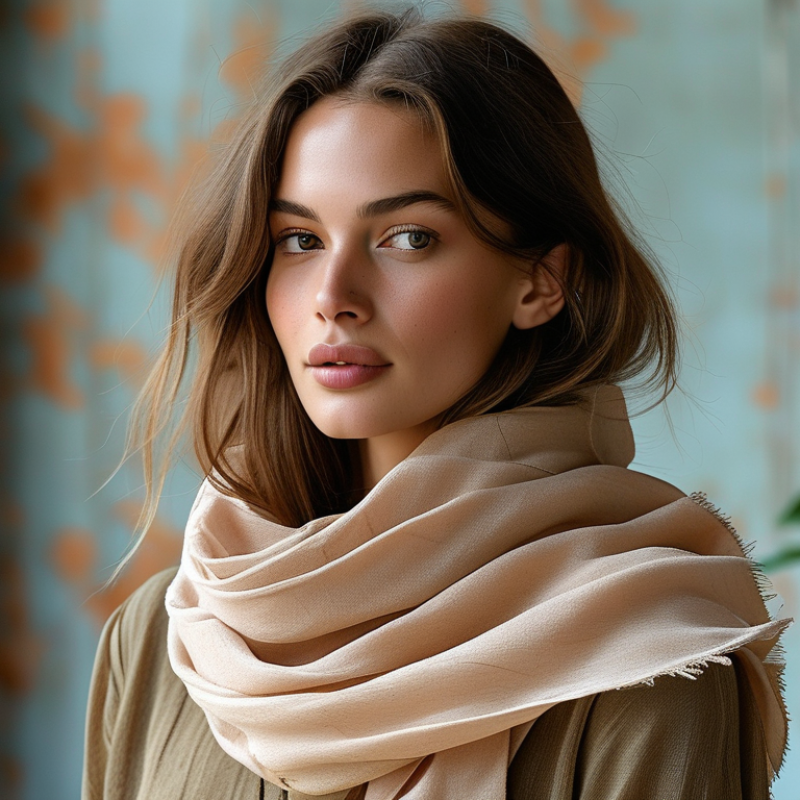
Fashion-reuse advocate Orsola de Castro said, “The most sustainable garment is the one already in your wardrobe.” It is a useful reminder, though not a complete buying rule. A custom scarf may last for years, or it may become an expensive impulse purchase. The difference often comes from checking breathability, colorfastness, stitching, and intended use before ordering. Think of a cream scarf with a narrow rolled hem, a soft blue print, and enough length for a loose neck knot. Small choices matter. Too much decoration can reduce versatility. Too little planning can make customization feel disappointing. These ten tips will help buyers compare suppliers, fabrics, measurements, printing methods, and care instructions with clearer judgment.

10 Tips for Buying Custom Women Summer Scarves

Define Summer Scarf Needs: UPF 30–50+ and Breathable Fabrics

Buying a custom women’s summer scarf starts with sun exposure, not color.
The WHO Global Solar UV Index guide recommends protection when the index reaches 3 or higher. For daily commuting, outdoor markets, or beach travel, request UPF 30, 40, or 50+ fabric.

Under AS/NZS 4399 testing, UPF 30 permits about 3.3% of ultraviolet radiation through, while UPF 50 permits about 2%. UPF 50+ allows less than 2%.
Cancer Council Australia classifies UPF 30–49 as very good protection and UPF 50+ as excellent. That difference matters on bright, reflective surfaces.

Breathability still controls comfort. Look for lightweight woven cotton, linen blends, or engineered polyester with moisture management. Ask for air-permeability results tested under ASTM D737, rather than trusting the word “cool.”

A loose weave may feel airy, but it can reduce sun protection. Darker dyes often absorb more UV, although color alone cannot prove performance. Specify fabric weight, weave, finished size, and edge construction in the order. A 70-by-180-centimeter scarf offers useful neck coverage without feeling bulky.

Test the sample outdoors for ten minutes. Feel the fabric after walking. I would not rely on a UPF label without asking whether testing covered the finished scarf, not only the fabric roll. Small gaps around the neck remain easy to overlook.

Compare Silk, Cotton, and Linen Using 12–19 Momme and GSM Data

Choosing a custom women’s summer scarf starts with measurable fabric data. Silk is rated in momme, not GSM. A 12–16 momme silk scarf feels light, airy, and slightly transparent. A 19 momme option feels denser and usually resists wear better.

Tip: Hold the fabric near a window. Light reveals uneven weaving and weak areas.

Tip: Check the hem closely, because loose stitching can ruin an otherwise beautiful scarf.

Tip: Request a physical sample before confirming a large order.

Cotton and linen are commonly compared by GSM, or grams per square metre. Lightweight cotton around 90–140 GSM suits humid days and frequent washing. Linen around 100–180 GSM offers a crisp hand and strong airflow, though it wrinkles quickly.

Tip: Ask whether the GSM refers to finished fabric. Finishing can change the result.

Tip: Rub a sample gently to test shedding.

Tip: Bend the fabric to judge softness and recovery.

Tip: Confirm shrinkage after washing, especially with linen.

I once underestimated this detail, and the final scarf felt shorter than expected. The numbers are useful, but imperfect.

Tip: Compare weave, not weight alone. A dense cotton may feel warmer than a loose linen.

Tip: Inspect color under daylight and indoor light.

Tip: Request colorfastness information for vivid shades.

Tip: Match the fabric to use: silk for polished drape, cotton for easy care, and linen for textured breathability.

Tip: Check care instructions before approving custom packaging.
Tip: Keep the sample, specification sheet, and approved color reference together. That small record prevents expensive misunderstandings.

Check Custom Dimensions, Colorfastness, and AATCC Testing Standards

10 Tips for Buying Custom Women Summer Scarves

When reviewing a custom women’s summer scarf, treat the measurement sheet as a production control document. State finished length, width, hem allowance, and acceptable tolerance in writing. Measure the sample twice. Light fabrics can shift after washing, steaming, or edge finishing. Ask for prewash and postwash measurements, especially with viscose, cotton, or blended fibers. A scarf that looks generous on a screen may feel narrow when wrapped.

Colorfastness deserves equal attention. Rub the printed surface with a dry and wet white cloth. Check for staining and visible fading. Test a sample under expected sunlight, not only under showroom lighting. AATCC methods can support this process. AATCC TM8 evaluates crocking, while AATCC TM16.3 addresses colorfastness to light. For washable scarves, AATCC TM61 can provide accelerated laundering information. These tests do not replace real-use evaluation. Color can deceive.

Request a test report showing the method, fabric composition, test conditions, and result. Confirm whether the report covers the actual fabric, print, and finishing process. A recycled or revised material may perform differently. I would also compare two production samples from separate batches. Small shade differences often appear there. Testing every possible risk may exceed a small order’s budget, so prioritize washing, rubbing, and light exposure. One weak point remains: laboratory results cannot perfectly predict years of daily wear. Documenting that limitation makes the buying decision more honest and reliable.

Evaluate Printing Methods Through AATCC 61 Wash-Resistance Ratings

10 Tips for Buying Custom Women Summer Scarves

Evaluate Printing Methods Through AATCC 61 Wash-Resistance Ratings

When buying custom women’s summer scarves, inspect the print before admiring the pattern. AATCC TM61 simulates repeated laundering under accelerated conditions. It helps evaluate color change and color transfer, but it is not a promise for every home wash. I have seen bright prints pass one test yet fade after harsh detergent and strong sunlight. Ask for the test date, fabric composition, printing method, and complete laboratory report. Tip: Prefer reports showing gray-scale ratings, where higher scores generally indicate better color retention. Do not accept “wash-resistant” without test details.

Printing methods behave differently on lightweight fabrics. Sublimation can create vivid designs on suitable synthetic fibers, while pigment or reactive printing may suit other materials and finishes. The fiber matters as much as the ink. Tip: Request a physical sample and wash it three times using cold water, mild detergent, and air drying. Photograph the scarf beside its original sample. Look for dull edges, bleeding around small flowers, or rough areas that lose softness. A sample can still mislead, because production batches may vary slightly.

Tip: Check both color change and staining on adjacent white fabric. A scarf that keeps its own color may still transfer dye. Ask whether the AATCC 61 test used conditions similar to your customers’ care instructions. “Pass” is too vague. Also check seam quality, print alignment, and fabric comfort against the neck. I would not choose the lowest quote without comparing these details. Sometimes a modestly softer print and clearer care guidance create a better long-term purchase.

10 Tips for Buying Custom Women Summer Scarves - Evaluate Printing Methods Through AATCC 61 Wash-Resistance Ratings

No. Buying Tip Evaluation Dimension AATCC 61 Test Reference Suggested Minimum Grade Practical Buying Check
1 Request a printed sample before placing a bulk order. Overall color change after accelerated laundering AATCC TM61, commonly using Test No. 2A for a 45-minute accelerated wash at 49°C Grade 4 or higher Compare an unwashed control swatch with the washed specimen under consistent lighting.
2 Match the test method to the scarf’s expected care conditions. Wash severity and temperature AATCC TM61 includes multiple test options; Test No. 1A is associated with 40°C, while Test No. 2A is associated with 49°C. Report the method Do not compare grades from different AATCC 61 test options as if they were identical conditions.
3 Select a printing process that suits the fiber and fabric construction. Dye or pigment attachment to the textile Use AATCC TM61 after the actual fabric, ink, pretreatment, curing, and finishing process are complete. Grade 4 or higher A passing result for one fabric blend or print system should not be assumed for another.
4 Check whether the print can transfer color to pale garments. Color transfer or staining onto adjacent fabric AATCC TM61 evaluation may include color staining assessment with adjacent multifiber fabric. Grade 4 or higher Pay special attention to dark, saturated, and red-based prints that may stain lighter materials.
5 Ask for separate results for light and dark colorways. Color durability by shade depth AATCC TM61 results are specimen-specific and should be recorded for each colorway or print design. Grade 4–5 A strong result for a pastel design does not validate a high-density black or navy design.
6 Review the gray scale used for visual color-change grading. Consistency of visual assessment AATCC gray scale ratings run from 5, indicating no appreciable change, to 1, indicating very severe change. Grade 4 or 5 Request the rating scale, test conditions, and evaluator information with the report.
7 Verify that the sample was tested after final curing and finishing. Production-representative performance AATCC TM61 should be performed on the finished article or production-equivalent specimen. Grade 4 or higher Confirm fabric composition, print coverage, curing conditions, and finishing details match the order.
8 Assess print durability at folds, edges, and high-contact areas. Coverage and construction effects Test specimens should represent the printed areas and fabric construction used in the finished scarf. No visible failure Inspect hems, seam areas, dense motifs, and sharply folded sections after washing.
9 Use the care label and wash instructions when interpreting the result. Expected consumer-care compatibility AATCC TM61 is an accelerated test and is not a direct count of household washing cycles. Method-specific target Treat the result as comparative performance data, not as a guaranteed number of home launderings.
10 Add an acceptance requirement to the purchase specification. Quality-control release standard Record the AATCC TM61 test number, temperature, duration, detergent conditions, and grading results. Grade 4 minimum Use the same approved reference sample and test protocol for pre-production and bulk inspection.
Rating note: On the commonly used gray scale for color change, Grade 5 represents the best resistance and Grade 1 represents the poorest resistance. AATCC TM61 is an accelerated laundering test; its results should be compared only when the test method and conditions are the same.

Verify Suppliers, Sample Quality, MOQ, Lead Time, and Unit Pricing

10 Tips for Buying Custom Women Summer Scarves

Buying custom women’s summer scarves requires more than attractive artwork. Verify the supplier’s registration, factory address, export experience, and production references. Request recent audit records and product test reports. Fashion Revolution’s 2023 Fashion Transparency Index found an average transparency score of only 26% among 250 major fashion companies. Do not rely on polished photographs alone. Schedule a video inspection, where possible. Ask who actually makes the scarves.

Order a sample using the exact fabric, size, print method, and finishing details. Check softness, edge stitching, colorfastness, shrinkage, odor, and packaging. Textile Exchange’s 2024 Materials Market Report estimates global fiber production reached 124 million tonnes in 2023. Material choices are complex. Confirm fiber content with documentation. A sample may look perfect and still fail after washing. That is an uncomfortable lesson. Record approved measurements and tolerances. Then confirm the MOQ for each color, design, and size. Ask whether mixed colors share one MOQ.

Lead time must begin after deposit, artwork approval, and sample confirmation. Request separate dates for sampling, bulk production, inspection, and dispatch. Add buffer time for peak seasons. Unit pricing should show fabric, printing, labor, packaging, labels, testing, and delivery terms. Compare like with like. A low quote may exclude essential costs. Ask for price breaks at three quantities, such as 300, 1,000, and 3,000 pieces. Put every specification in the purchase agreement. Include inspection rights, acceptable defect limits, and the remedy for late delivery. Suppliers sometimes promise too quickly. That deserves another question.

FAQS

: How do momme and GSM compare for summer scarves?

: Silk uses momme, while cotton and linen use GSM. A 12–16 momme silk feels light and airy. A 19 momme silk feels denser and more durable. Cotton around 90–140 GSM suits humid weather. Linen around 100–180 GSM feels crisp and breathable.

Which fabric is best for different summer needs?

Choose silk for smooth drape and a polished appearance. Choose cotton for easier washing and daily use. Choose linen for airflow and natural texture. Linen wrinkles quickly. That may bother some users.

How can I inspect fabric quality before ordering?

Hold the fabric near a window. Uneven weaving and thin areas may become visible. Check the hem for loose stitching. Rub the sample gently to check shedding. Bend it to judge softness and recovery.

Why should I request a physical sample?

A sample shows texture, transparency, softness, and actual color. It also reveals print bleeding and rough surfaces. Measure it twice. Online images can make a scarf look larger than it feels.

What measurements should a custom scarf specification include?

Record finished length, finished width, hem allowance, and acceptable tolerance. Request measurements before and after washing. Light fabrics can change during washing, steaming, or finishing. Keep the approved sample and specification sheet together.

How can I check colorfastness at home?

Rub the printed surface with a dry white cloth. Repeat with a damp white cloth. Check for staining and fading. Test the scarf under expected sunlight. Indoor lighting can hide problems.

What should a useful colorfastness report contain?

It should identify the fabric composition, print method, test conditions, and results. Ask whether the report covers the actual production material. Accelerated washing, rubbing, and light tests provide useful evidence. They cannot predict every year of daily wear.

How should I evaluate a printed scarf after washing?

Wash a sample three times with cold water and mild detergent. Air-dry it, then compare it with the original sample. Look for dull edges, bleeding flowers, fading, or lost softness. Check adjacent white fabric for transferred dye. “Passed” sounds reassuring, but details matter.

Conclusion

Buying Custom Women Summer Scarves requires balancing comfort, protection, appearance, and production reliability. Start by identifying the intended use and look for breathable fabrics with UPF 30–50+ protection. Compare silk, cotton, and linen by considering silk weight in the 12–19 momme range and fabric density in GSM, since these factors influence softness, airflow, durability, and seasonal comfort. Confirm custom dimensions, edge finishing, color accuracy, and colorfastness, and ask whether testing follows recognized AATCC standards.

Printing quality is equally important. Review the selected printing method and request wash-resistance information based on AATCC 61 testing, while checking how well colors and patterns remain after repeated care. Before placing an order, verify the supplier’s experience, sample quality, minimum order quantity, lead time, packaging, and unit pricing. A carefully approved sample can reveal construction or color problems early, helping ensure that the final Custom Women Summer Scarves meet both practical expectations and visual requirements.

Ethan

Ethan

Ethan is a seasoned marketing professional dedicated to helping businesses understand how thoughtful products, reliable service, and practical innovation can create lasting value. With a strong understanding of the company’s solutions, customer needs, and industry trends, he regularly contributes......