Industry Insights & Manufacturing Knowledge
Expert guides, textile sourcing strategies, quality assurance tips, and international export trends from KK Fashion Exports.
Sourcing Cotton Crepe Ombre Dresses wholesale requires more than comparing attractive photographs. The fabric must feel smooth, hold its gradient, and perform consistently after washing. A soft showroom sample can hide weak seams, uneven dye absorption, or unstable sizing. That is where experienced supplier evaluation matters.
Textile consultant Deborah Young offers a practical reminder: “Test the cloth before trusting the color.” Her point is especially relevant to ombre garments. Color should transition gradually, without harsh bands or pale patches. Cotton crepe should also show a fine grain, controlled drape, and moderate resistance to wrinkling. These details become visible under direct light, not only inside edited catalog images.
This guide explains how to source Cotton Crepe Ombre Dresses from dependable wholesale partners. It covers fabric specifications, gradient development, sample approval, production capacity, size grading, packaging, and quality inspections. Buyers should request fabric composition, weight, shrinkage results, and colorfastness records. Ask for close-up photos. Better still, order a pre-production sample.
Small errors matter. A sleeve can twist. A hem can ripple. A shade can change between batches. I have seen buyers focus on unit price and overlook finishing costs. That approach often becomes expensive later. Reliable sourcing needs clear measurements, written standards, and realistic delivery discussions. Supplier claims should be checked against physical samples and independent test results. The process is not flawless, but careful documentation makes uncertainty easier to manage.
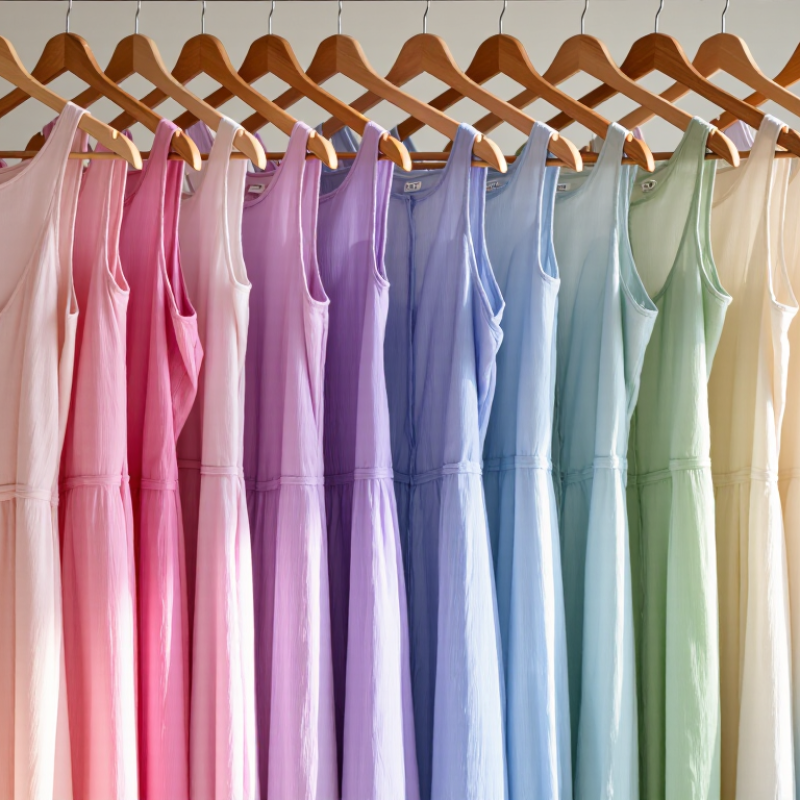
Cotton crepe ombre dresses combine a soft, grainy surface with a gradual color transition. The fabric should feel breathable, fluid, and slightly textured. A good ombre effect changes smoothly from the shoulder to the hem. Harsh color lines often indicate weak dye control. Cotton crepe may also shrink after washing, so pre-shrunk fabric deserves attention.
Wholesale requirements begin with measurable specifications. Request the fiber composition, fabric weight, width, shrinkage rate, and colorfastness results. A practical target is consistent sizing across the full order. Ask for a sample in the exact ombre colors, not a similar swatch. Lighting can change the apparent shade. Natural daylight checks are essential.
Keep the details clear. A technical sheet should show measurements, seam finishes, sleeve length, lining, and care labels. Confirm the minimum order quantity and size ratio before production. Inspect the first finished pieces for twisted seams, uneven gradients, loose threads, and puckering near the zipper. Cotton crepe can crease during packing, so breathable packaging and careful folding help. Still, packaging is not the main risk. Color variation is. One overlooked dye lot may create visible differences between dress batches. My earlier assumption was that a larger order always reduced costs. It did not. Rework, inconsistent shades, and late corrections changed the calculation. Wholesale buyers should compare the complete landed cost, not only the unit price.
How to Source Cotton Crepe Ombre Dresses Wholesale?
Defining product specifications before contacting suppliers prevents costly sampling mistakes. Specify cotton percentage, crepe weight, drape, opacity, and ombre placement. A practical starting point is 110–150 GSM for warm-weather dresses. Request laboratory results for shrinkage, colorfastness, and fiber composition. The gradient should remain smooth near seams, not appear sharply banded. It sounds minor. Customers notice it immediately.
Textile Exchange’s 2024 Materials Market Report states that global fiber production reached 124 million tonnes in 2023. Cotton represented about 22% of total output. This supports cotton’s continuing relevance, but not every cotton fabric suits every market. The USDA Cotton: World Markets and Trade report estimated global cotton mill use near 116 million bales for 2024/25. Demand exists, yet price and consistency still matter. Suppliers should confirm fabric availability across repeat orders.
Quantity planning must reflect the target customer, climate, and sales channel. For a new collection, test 60–120 units across three sizes and two gradient colors. Reorder data can guide a 300–500-unit production run. A beachwear customer may prefer breathable, unlined styles. Occasionwear buyers may require lining, stronger seams, and richer contrast. I would also question the assumed size curve. It may not match local demand. Review returns, customer measurements, and color preferences before increasing the order.
Sourcing cotton crepe ombre dresses wholesale requires more than comparing unit prices. A dependable supplier should explain fabric weight, fiber content, dyeing method, and shrinkage results. Textile Exchange’s Materials Market Report 2024 recorded global fiber production at approximately 124 million tonnes in 2023, with cotton representing about one-fifth. This scale makes cotton easy to source, but quality still varies sharply between mills.
Request a sample before discussing large quantities. Check the crepe surface under daylight, especially where the ombre color changes. The transition should look gradual, not striped. Measure the sample before and after washing. A shrinkage result above 3% deserves closer review. Ask for recent laboratory reports covering colorfastness, fabric composition, and restricted substances. Suppliers should also provide production lead times, minimum order quantities, carton dimensions, and clear replacement terms for defective pieces.
USDA’s Cotton: World Markets and Trade reports show that global cotton production and trade fluctuate by season, weather, and inventory levels. Therefore, a supplier’s fixed price may not remain realistic for long. I once trusted a polished catalog too quickly; the delivered crepe felt thinner than the sample. That mistake changed my evaluation process. I now compare at least three suppliers, verify factory photographs through live video, and request a small trial order. Certifications help, but they do not replace physical inspection. Keep written records of every measurement, approval, and color reference. Supplier communication can still fail. Clear evidence reduces the damage.
Sourcing cotton crepe ombre dresses wholesale requires more than comparing attractive photos. Request identical samples from several factories, then inspect them under daylight. Check the ombre transition, crepe weight, seam alignment, lining, and colorfastness. A useful sample should represent production quality, not a specially polished showroom piece. Ask for fabric composition and shrinkage results. Cotton crepe can soften after washing, but excessive shrinkage changes the fit. I once underestimated sleeve length after laundering. That small error affected the whole size range. Record measurements before and after washing.
Compare prices through a complete cost sheet. Include fabric, dyeing, lining, labels, packaging, sampling, and shipping terms. The lowest quotation may exclude important finishing work. Ask whether pricing changes with quantity, custom colors, or size grading. Evaluate production capability through evidence. Review monthly capacity, cutting equipment, quality checks, lead times, and previous export experience. Request a small pilot order before committing to bulk production. It may feel slower. However, it can reveal recurring defects. Inspect dresses from different cartons, not only the first piece.
Tips: Keep one approved sample sealed and dated. Use it during bulk inspection. Ask for tolerance measurements in writing. Discuss correction procedures before production begins. Communication can still fail, even with careful suppliers. Leave room for peak-season delays. Verbal confidence is not enough.
| Comparison Criteria | Option 1 Small-Batch Workshop |
Option 2 Mid-Volume Factory |
Option 3 Full-Service Manufacturer |
Option 4 Large-Scale Production Unit |
|---|---|---|---|---|
| Recommended order volume | 50–150 pieces | 150–500 pieces | 300–1,000 pieces | 1,000+ pieces |
| Sample fee per style | US$25–45 | US$35–60 | US$45–80 | US$60–120 |
| Indicative wholesale price | US$16–24 per dress | US$13–21 per dress | US$17–29 per dress | US$11–18 per dress |
| Fabric composition | 100% cotton crepe | 100% cotton crepe or cotton-rich blend | 100% cotton crepe; custom blends available | Cotton crepe or cotton-viscose blend |
| Typical fabric weight | 115–135 GSM | 125–155 GSM | 135–175 GSM | 120–160 GSM |
| Ombre dyeing capability | Two-tone dip dye; limited shade matching | Two- or three-tone gradient; Pantone matching | Multi-tone gradients; placement and shade development | Repeatable bulk dyeing with production lab dips |
| Sample development time | 7–12 days | 10–18 days | 14–25 days | 15–30 days |
| Bulk production lead time | 25–40 days | 30–45 days | 35–55 days | 40–65 days |
| Size range | XS–XL | XS–2XL | XXS–4XL | XS–3XL |
| Pattern and fit service | Basic alterations | Pattern adjustment and size grading | Technical pattern, grading, and fit samples | Standardized grading with production markers |
| Quality inspection | Visual inspection; limited measurement control | Inline and final inspection | Fabric, measurement, shade, and final inspection | Inline, end-line, and pre-shipment inspection |
| Colorfastness testing | Basic wash test recommended | Wash and rubbing tests available | Wash, rubbing, perspiration, and light tests | Documented laboratory testing by order requirement |
| Customization flexibility | High for simple styles | High for standard dress construction | Very high, including trims and construction details | Best for approved repeat styles |
| Best suited for | Market testing and limited collections | Growing online and boutique orders | Premium collections and detailed specifications | Large seasonal or repeat wholesale programs |
| Benchmark note: Prices are indicative FOB ranges in US dollars for cotton crepe ombre dresses and vary according to fabric composition, garment length, embellishment, order quantity, packaging, testing, and shipping terms. Confirm the final quotation after approving the fabric swatch, lab dip, size chart, pre-production sample, and inspection standard. | ||||
When sourcing cotton crepe ombre dresses wholesale, I confirm order details before discussing payment. I request a pre-production sample in the approved color range. The sample should show fabric weight, seam quality, lining, and gradient placement. Small shade changes can affect an entire collection.
Customization needs written specifications. Include measurements, sleeve shape, neckline depth, label placement, and packing instructions.
Ask the supplier to confirm tolerances for size and color. I also set a sample approval deadline and a realistic production quantity. Fewer details create expensive misunderstandings.
Shipping requires practical planning. Confirm the finished carton size, gross weight, shipping method, insurance, and required commercial documents. Request photos of packed cartons before dispatch.
The supplier agreement should state production timing, inspection rights, defect handling, payment stages, and cancellation terms. I prefer a final inspection before the balance payment. It is not always convenient. It prevents avoidable disputes.
A third-party inspection can check random dresses against the approved sample and measurement chart. Keep every revision in one written record, because scattered messages can weaken accountability.
I once underestimated the effect of humid storage on crepe fabric. That mistake changed my packing requirements. Supplier discussions should leave room for such lessons.
Request identical samples from several factories. Inspect them in daylight. Check the gradient, fabric weight, seams, lining, and colorfastness. A showroom sample may look better than bulk production.
Ask for the fiber composition and shrinkage results. Cotton crepe may soften after washing. Excessive shrinkage can change the fit. Record measurements before and after laundering.
Use a complete cost sheet. Include fabric, dyeing, lining, labels, packaging, sampling, and shipping. Ask about quantity pricing and custom colors. The lowest quote may omit finishing work.
Request evidence of monthly capacity, cutting equipment, quality checks, and lead times. Review previous export experience. A small pilot order can reveal repeated defects.
Inspect dresses from different cartons. Do not check only the first piece. Compare measurements with the approved sample. Look for uneven gradients, loose seams, and inconsistent sleeve lengths.
Record measurements, sleeve shape, neckline depth, label placement, and packing instructions. Confirm size and color tolerances. Also set a sample approval deadline.
Confirm carton size, gross weight, shipping method, insurance, and required commercial documents. Request photos of packed cartons before dispatch. Humidity matters.
State production timing, inspection rights, defect handling, payment stages, and cancellation terms. Keep every revision in one written record. Verbal confidence is not enough.
Arrange inspection before paying the balance. A third-party inspector can compare random dresses with the approved sample. It may feel inconvenient. It can prevent avoidable disputes.
Sourcing Cotton Crepe Ombre Dresses wholesale requires a clear understanding of the fabric, gradient coloring, garment construction, and the expectations of your target market. Begin by defining essential specifications such as dress styles, available sizes, color transitions, fabric weight, finishing details, order quantities, budget, and intended sales channel. These details help you identify suitable suppliers and avoid confusion during negotiations.
When evaluating wholesale dress suppliers, request samples to assess softness, color consistency, stitching, fit, and overall durability. Compare pricing alongside minimum order quantities, production capacity, lead times, customization options, and quality-control procedures rather than choosing solely by cost. Before placing an order, confirm every requirement in writing, including approved samples, labeling, packaging, payment terms, shipping arrangements, inspection procedures, and solutions for defects or delays. A clear supplier agreement and realistic production schedule can support smoother purchasing, consistent quality, and reliable inventory planning for your Cotton Crepe Ombre Dresses collection.