Industry Insights & Manufacturing Knowledge
Expert guides, textile sourcing strategies, quality assurance tips, and international export trends from KK Fashion Exports.
Choosing a Beachwear Kaftans Manufacturer takes more than comparing prices or attractive catalog photos. The global swimwear market was valued at USD 20.47 billion in 2023, according to Grand View Research, which also projects growth through 2030. That market context points to opportunity, but it also means buyers need to examine product quality and supplier reliability carefully.
A kaftan can look effortless on a beach, yet its performance depends on practical details: fabric opacity in bright sun, seam strength after washing, and sizing consistency across a production run. Ask for a sample in the intended fabric, then inspect the stitching, print alignment, and finishing yourself. Request clear information about minimum order quantities, lead times, quality checks, and how defects are handled. Useful answers should be specific, not just reassuring.
Look for a manufacturer with relevant beachwear experience and evidence of repeatable production. Ask how it sources materials and whether it can provide supporting documentation for any sustainability claims. A polished sample can still hide uneven bulk production. That matters. No single certification or factory visit proves everything, either. Compare several suppliers, check references where possible, and keep your requirements in writing. The best partner is not always the cheapest. It is the one that communicates clearly and can make the kaftan you approved, consistently.
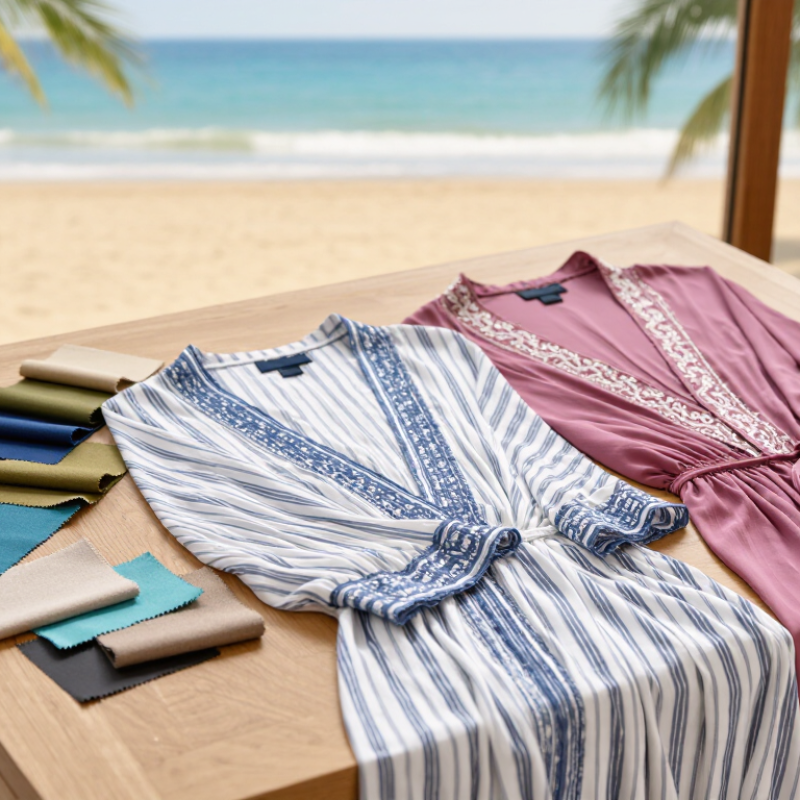
Define the kaftan’s purpose before comparing manufacturers. Will it serve as a lightweight poolside cover-up, a resort garment, or a more opaque beach dress? Specify the intended fit, length, sleeve shape, neckline, and size range. For example, a knee-length style with wide sleeves needs different grading from a floor-length design with side slits.
Choose fabric requirements with real use in mind. State the preferred fiber, weight, texture, and level of sheerness, and ask how the material behaves when damp. A soft fabric can feel pleasant but may cling or become too transparent. Small details matter. List seam finishes, closures, embroidery, print placement, and color tolerances. Add reference photos or a simple sketch, but label which details are essential and which can change.
Set practical manufacturing expectations in writing. Include target order quantities, sample needs, acceptable production timelines, packaging, and any quality checks, such as measuring finished garments or inspecting seams. Share a target cost range if you have one; otherwise, request separate pricing for different fabric and trim options. Ask the manufacturer to confirm what is included in each quote. A single sample cannot reveal every issue, so plan time for revisions. I would not lock every specification too early; sometimes a sample exposes a proportion problem that a drawing misses. Keep those changes documented before bulk production begins.
Research should begin with the garment, not a long supplier list. For a beachwear kaftan, note the fabric, fit, size range, trims, and target order quantity. Consider whether the fabric should remain opaque when damp and feel light in humid weather. These details make supplier replies easier to compare.
Search established apparel directories, trade-fair exhibitor lists, and manufacturers’ own websites. Check that each candidate actually produces kaftans or similar cover-ups, rather than only reselling finished goods. Look for clear factory information, photos showing seams and finishing, and specific production capabilities. Ask for recent references, sample lead times, minimum order quantities, and fabric options. Vague answers matter.
Then shortlist three to five candidates. Use a simple scorecard for product experience, sample quality, communication, pricing clarity, and production capacity. Send each factory the same brief; otherwise, quotes may not be comparable. When samples arrive, inspect the neckline, side seams, hem, and print alignment in daylight. Wash and wear them, too. A neat photo can hide a rough edge. Keep notes, but leave room for judgment: a spreadsheet cannot show whether a supplier listens when a detail needs changing. It is easy to overlook that part, and it can cost time.
| Evaluation Dimension | What to Check | Evidence to Request or Verify | Shortlisting Standard | Suggested Weight | Score (1–5) |
|---|---|---|---|---|---|
| Kaftan product expertise | Experience with the intended styles, such as cover-ups, tunics, maxi kaftans, relaxed-fit garments, embroidery, or printed designs. | Relevant product photos, sample garments, construction details, and examples of similar work. Confirm which processes are completed in-house and which are subcontracted. | Prioritize suppliers that can demonstrate relevant garment construction and finish, rather than relying on a general apparel portfolio alone. | 15% | — |
| Fabric and trim capability | Ability to source or work with the required fabric composition, weight, drape, opacity, color, and care requirements, plus suitable trims and embellishments. | Fabric swatches, composition and care information, available color options, trim specifications, and confirmation of whether buyer-supplied materials are accepted. | Shortlist suppliers whose available materials and finishing options match the product brief; approve fabric and color by sample before bulk production. | 15% | — |
| Quality control | How the supplier checks measurements, stitching, seams, print or embroidery placement, color consistency, and finished-garment appearance. | Written inspection steps, measurement tolerance policy, defect handling process, and a pre-production or production sample for review. | Look for documented checks at relevant production stages and an agreed process for correcting non-conforming goods. | 15% | — |
| Minimum order quantity and capacity | Minimum order quantity per style, color, or size; capacity for repeat orders; and willingness to support a development or pilot order. | Written MOQ details, capacity estimates for the requested styles, production calendar assumptions, and confirmation of how size and color splits affect the order. | Compare the supplier’s written terms with your planned order and confirm that capacity is available for the required production window. | 15% | — |
| Sampling and product development | Process for reviewing the tech pack, making prototypes, revising fit or details, and approving a final pre-production sample. | Sample charges, sample timing, number of revisions included, pattern or grading capabilities, and the sample-approval workflow. | Prefer a clearly defined process with written approval checkpoints before bulk cutting and production. | 10% | — |
| Production and shipping timeline | Estimated sampling, material sourcing, production, inspection, and dispatch timelines, including dependencies and peak-season constraints. | A written schedule that separates sample and bulk lead times, identifies required buyer approvals, and states the proposed shipping terms. | Compare like-for-like timelines and build in time for sample changes, quality checks, and shipping rather than relying on an unqualified estimate. | 10% | — |
| Pricing and payment terms | Unit pricing, sample and development charges, material or embellishment surcharges, payment milestones, and any costs excluded from the quote. | An itemized quotation based on the same specification, order quantity, fabric, size range, packaging, and delivery terms for each supplier. | Assess total landed-cost assumptions and quote clarity, not just the lowest unit price. Confirm all commercial terms in writing. | 10% | — |
| Compliance and traceability | Whether the supplier can provide documentation relevant to the buyer’s market, product, materials, and any stated social or environmental requirements. | Applicable certificates or audit records, scope and validity dates, material documentation, and permission to verify documents with the issuing organization where appropriate. | Check that documents are current, relevant to the facility and product, and independently verifiable when verification is available. | 5% | — |
| Communication and reliability | Responsiveness, clarity, willingness to answer technical questions, and consistency between sales discussions and written commitments. | Written replies to the same product brief, confirmed meeting notes, named points of contact by role, and prompt follow-up on open questions. | Shortlist suppliers that provide specific, consistent answers and document decisions, changes, and approvals. | 5% | — |
Scoring guide: Rate each dimension from 1 (weak fit or insufficient evidence) to 5 (strong fit supported by verifiable evidence). Multiply each score by its suggested weight to compare candidates consistently. MOQs, costs, capabilities, and lead times vary by supplier and order specification, so confirm them directly in writing before shortlisting.
How to Find the Best Beachwear Kaftan Manufacturer?
Assess Fabric Expertise, Production Capacity, and Compliance
A strong manufacturer can explain how a fabric performs, not just name its fiber content. Ask how lightweight cotton, viscose, or a sheer blend handles sunlight, saltwater, and repeated washing. Request swatches and a finished sample. Check drape, seam strength, color consistency, and whether the garment feels comfortable when damp. Details matter. One attractive sample is useful, but it cannot prove every production batch will match.
Production capacity should fit your order size and delivery schedule. Ask for monthly output, current lead times, and how the factory manages peak-season orders. Review a production timeline that includes cutting, stitching, inspection, and packing. If possible, compare a pre-production sample with pieces from a completed run. Small differences can slip through. That is worth discussing openly, rather than assuming a smooth sample guarantees consistent results.
Tips: Ask for recent fabric test reports and records showing how defects are handled. Check whether compliance documents are current and relevant to your target markets, including fiber-content and care-label requirements. Verify what each certificate covers; a document alone is not proof of every factory practice. Request clear answers, then keep them in writing.
Assess fabric expertise, production capacity, and compliance using a practical supplier-evaluation framework.
Suggested evaluation weights—not industry survey results. Review fabric knowledge and sample quality, verify capacity against your order and delivery needs, and check applicable certifications and destination-market requirements.
How to Find the Best Beachwear Kaftan Manufacturer?
Evaluate Samples, Quality Control, and Communication
A kaftan sample should be tested, not just admired. Check the fabric in daylight for color consistency and opacity, then feel how it drapes over the shoulders. Measure the garment against the agreed size chart, including sleeve width and hem length. Inspect seams, neckline finish, and any decorative details for loose threads or uneven stitching. Small flaws can become repeated problems in a production run.
Ask whether the approved sample uses the same fabric, trims, and construction planned for bulk orders. If possible, wash a sample according to the care instructions and check for shrinkage, fading, or twisted seams. Keep dated photos and written notes. Details matter. A sample may look perfect under showroom lights but feel too heavy in coastal heat. That difference is easy to miss.
Discuss quality checks before confirming an order. A reliable manufacturer should explain when inspections happen, how defects are recorded, and what happens if measurements fall outside agreed tolerances. Communication is part of quality control. Notice whether replies address your questions clearly, especially about fabric changes, timelines, and corrective actions. One vague answer may not mean much, but repeated uncertainty deserves attention. I would still leave room for revision; no checklist catches everything.
A low unit price can look attractive, but it may hide costs that appear later. For a beachwear kaftan, request a clear breakdown of fabric, printing, trims, labels, sampling, and packaging. Check whether freight, taxes, and sample charges are included or quoted separately. Small details matter. A sheer fabric may need lining, while a placement print can create extra setup costs. Compare quotes using the same fabric weight, size range, and order quantity. Otherwise, the cheaper option may simply offer less.
Terms can change the real cost just as much as the price. Confirm the minimum order quantity, payment stages, sample timeline, and production lead time in writing. Ask how many sample revisions are included and what happens if finished pieces differ from the approved sample. A supplier’s answer should be specific, not just reassuring. Check whether delivery dates allow time for inspection and transport. A spreadsheet helps, though it cannot capture every risk; I would still leave room for an unexpected delay. One overlooked charge can undo a careful comparison.
Specify the garment’s purpose, fit, length, sleeve shape, neckline, and size range. A knee-length design needs different grading from a floor-length style.
State the preferred fiber, weight, texture, and sheerness. Ask how the fabric drapes and feels when damp. It may cling.
List seams, closures, embroidery, print placement, color tolerances, quantity, packaging, and quality checks. Add a sketch or reference photos. Mark flexible details.
Check color and opacity in daylight. Measure sleeve width and hem length against your size chart. Inspect seams for loose threads.
If possible, follow its care instructions and check for shrinkage, fading, or twisted seams. Keep dated photos and notes. Details matter.
Ask whether both use the same fabric, trims, and construction. A sample can reveal proportion problems a drawing misses.
Compare the same fabric weight, quantity, and size range. Request separate costs for fabric, printing, trims, labels, samples, and packaging.
Confirm minimum order quantity, payment stages, revision limits, and production timelines. Ask what happens if finished pieces differ from the approved sample.
Ask when inspections happen, how defects are recorded, and what corrective steps follow. Allow time for inspection and transport. Delays happen.
Finding the best Beachwear Kaftans Manufacturer starts with defining your product clearly. Consider the styles, fabrics, sizes, colors, order quantities, and customization options you need. Use these requirements to research potential manufacturers and create a shortlist based on their relevant experience, production capabilities, and ability to meet your expected timelines.
Before making a decision, assess each manufacturer’s fabric expertise, quality standards, and production capacity. Request samples to check comfort, fit, construction, and finishing, and ask how quality is monitored throughout production. Clear, timely communication is also essential for resolving questions and coordinating changes. Finally, compare quotes alongside minimum order quantities, lead times, payment arrangements, and other terms. Choosing a manufacturer based on the full picture—not price alone—can help you build a dependable production relationship and create kaftans that meet your customers’ expectations.