Manufacturers of Scarves, Shawls, Garments & Fashion Accessories from India  |  About Us  |  Contact Us
Garment Manufacturing & Apparel Industry Blog
Apparel Manufacturing & Export Insights
Textile Sourcing & Quality Control Blog

Industry Insights & Manufacturing Knowledge

Garment Manufacturing & Apparel Export Blog

Expert guides, textile sourcing strategies, quality assurance tips, and international export trends from KK Fashion Exports.

0%

Cotton Crepe Printed Dresses continue to attract wholesale buyers seeking comfort, movement, and commercial appeal. Their lightly textured surface holds floral, geometric, and abstract prints with gentle depth. The fabric also feels breathable against the skin. That matters during warm retail seasons.

Textile consultant Deborah Young offers a practical reminder: “A fabric’s performance is part of its beauty.” This principle guides our selection. Each dress should be judged beyond its photograph. Buyers need to examine crepe weight, opacity, shrinkage, colorfastness, stitching, and print registration. A vivid print is not enough. The dress must survive fitting rooms, repeated washing, and everyday movement.

This Top 10 guide reviews Cotton Crepe Printed Dresses for real wholesale decisions. It considers silhouette, sleeve design, size availability, minimum order quantities, lead times, and retail flexibility. Some styles may look perfect online but feel lighter than expected. That is worth admitting. Sample inspection remains essential before placing a larger order.

Expect practical comparisons rather than exaggerated promises. We focus on dresses that can support different customer profiles, from relaxed boutique shoppers to occasionwear buyers. Details matter, such as a smooth neckline, secure seams, and a skirt that falls without clinging. Strong options should balance print clarity with comfortable construction. A beautiful pattern helps. Reliable production helps more.

Wholesale success is rarely accidental. It begins with careful fabric evaluation and honest product testing.
Top 10 Cotton Crepe Printed Dresses for Wholesale Buyers

Cotton Crepe Fabric: Properties and Wholesale Advantages

Top 10 Cotton Crepe Printed Dresses for Wholesale Buyers

Cotton crepe combines a dry hand feel with a lightly crinkled surface. Its texture gives printed dresses more visual depth. The fabric also absorbs moisture and allows reasonable airflow in warm markets. Cotton crepe usually feels less slippery than synthetic crepe. That helps during cutting, sewing, and quality checks.

Textile Exchange’s 2024 Materials Market Report estimated cotton held about 19% of global fiber production in 2023. This confirms cotton’s continuing commercial relevance. The USDA Foreign Agricultural Service’s October 2024 report forecast global cotton production near 116.9 million 480-pound bales for 2024/25. Large supply supports repeat wholesale sourcing, although prices can still change sharply. Cotton crepe may shrink or wrinkle without proper finishing. No fabric is perfect. Wholesale buyers should request fabric weight, shrinkage results, colorfastness data, and a physical sample before placing large orders.

Tips: Compare two or three suppliers using the same wash test. Check print clarity near seams and pleats. Ask whether the fabric is pre-shrunk. A practical test is simple: wash one sample, air-dry it, then measure the hem and sleeve length. Minor variation is normal, but unexplained distortion deserves attention. For printed cotton crepe dresses, medium-density designs often hide creasing better than very pale, open layouts.

How Printed Dress Styles Are Ranked for Wholesale Buyers

Wholesale buyers should rank printed cotton crepe dresses by commercial evidence, not visual appeal alone. The strongest styles combine reliable fabric supply, clear sizing, controlled printing, and practical wholesale margins. Textile Exchange’s 2024 Materials Market Report recorded 124 million tonnes of global fiber production in 2023. Cotton remained a major natural-fiber category, supporting continued demand for breathable summer apparel.

Sell-through potential deserves the highest score. Review recent orders, repeat inquiries, and returns by size and color. A useful ranking can assign 30% to expected sell-through, 20% to fabric performance, and 15% to production consistency. Colorfastness matters when buyers display dresses under strong retail lighting. The American Association of Textile Chemists and Colorists provides standardized testing methods for colorfastness, although test results do not guarantee perfect customer satisfaction. Small details count. Check sleeve recovery, seam puckering, print alignment, and crepe weight before approving bulk production.

Price and delivery should shape the remaining score. The 2024 State of Fashion report from McKinsey identified value sensitivity as a continuing pressure across apparel markets. Therefore, a beautiful print may rank lower if its cost leaves little room for wholesale markup. I would also compare minimum order quantities, lead times, size availability, and replacement policies. This method is useful, but imperfect. Forecasts can miss sudden weather shifts or local color preferences. A tropical print may perform poorly in one market, while a muted geometric design moves quickly elsewhere. Buyers should update rankings after each selling season, using actual sales data rather than personal taste.

Top 10 Cotton Crepe Printed Dresses for Wholesale Buyers

Printed dress styles are ranked with a 100-point wholesale benchmark based on commercial versatility, print appeal, size-range adaptability, production practicality, and seasonality.

Higher scores indicate stronger wholesale potential for broad retail assortments. The ranking focuses on style characteristics rather than company or brand performance.

Top 10 Cotton Crepe Printed Dress Designs

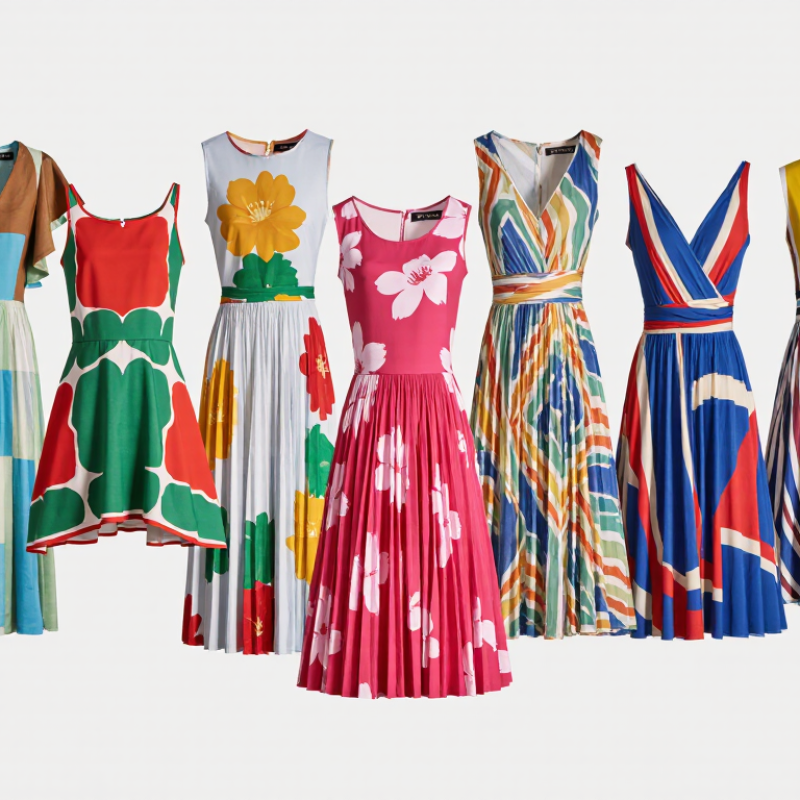
Cotton crepe printed dresses work well for wholesale collections because the fabric feels soft, drapes neatly, and resists heavy wrinkling. A focused ten-design assortment can serve different retail preferences: a botanical wrap dress, geometric midi dress, paisley shirt dress, border-print maxi dress, dotted tiered dress, abstract shift dress, tropical kaftan dress, micro-floral A-line dress, striped-panel tunic dress, and block-print utility dress.

Each design should have a clear selling feature. The wrap style suits adjustable fitting, while the shirt dress supports everyday styling. A border print creates visual length on maxi silhouettes. Smaller floral patterns often feel easier to merchandise across seasons. Cotton crepe also handles gathered sleeves, waist ties, and soft pleats without looking overly rigid. Keep the details functional.

Production checks matter. I recommend testing fabric shrinkage, colorfastness, seam strength, and print alignment before bulk approval. A 110–140 GSM crepe can feel breathable, but the final weight depends on yarn quality and finishing. Size grading must be checked on the actual pattern, not only on a measurement chart. Small inconsistencies happen. They deserve attention.

Wholesale buyers should request pre-production samples and inspect the reverse side of printed fabric. Uneven coverage may appear after washing. It is not always a failure, but it can affect customer expectations. Clear care labels, consistent measurements, and realistic photos make these ten dress designs easier to sell reliably.

Key Factors for Evaluating Quality, Fit, and Production

Top 10 Cotton Crepe Printed Dresses for Wholesale Buyers

For a reliable top-ten shortlist, inspect cotton crepe before judging the print. Experienced buyers should rub the fabric gently and check recovery after stretching. Quality crepe feels softly textured, yet it should not appear limp or overly thin. Hold each dress near a window. Uneven weaving, loose threads, and weak seams become easier to see. Review the print from a short distance and close up. Colors should remain clear, while repeated motifs should align across major panels. Small flaws matter.

Tips: Request fabric swatches, measurement charts, and pre-production samples. Compare the sample with the approved specifications. Measure bust, waist, hip, sleeve opening, and total length. A two-centimeter difference can change the fit noticeably. Check shrinkage after washing, especially around hems and sleeves. Ask for colorfastness results when dark prints are involved. Keep written records of every correction.

Production reliability also depends on construction details. Examine seam density, neckline finishing, button strength, lining, and hem balance. Cotton crepe can crease during packing, so folding tests are useful. Ask how the factory controls cutting accuracy across multiple sizes. I once focused too heavily on attractive prints and overlooked uneven armholes. That mistake made the dresses harder to sell. Fit must be tested on more than one body type. A dress that suits a mannequin may pull across the back on a real wearer. Confirm lead times, inspection stages, fabric composition, and replacement procedures before placing a larger order.

Wholesale Sourcing, Pricing, and Order Considerations

For wholesale buyers, cotton crepe dresses need more than attractive prints. In my sourcing work, fabric verification comes before price comparison. Ask for fiber composition, fabric weight, shrinkage results, and colorfastness reports. A soft hand feel can hide excessive synthetic content. Request a physical swatch, not only digital images. Small details matter.

Pricing depends on fabric width, print method, pattern complexity, stitching, trims, packing, and order quantity. Compare quotations line by line. A lower unit price may exclude sampling, inspection, freight, or export documentation. For a useful estimate, send the same tech pack to each supplier. Include measurements, print scale, label requirements, size range, and delivery port. Cotton prices and exchange rates can move, so confirm the quote’s validity period.

Before placing a bulk order, approve a pre-production sample. Check seam puckering, print alignment, sleeve balance, and wash shrinkage. Define an acceptable measurement tolerance. Confirm MOQ by color and size, production lead time, payment stages, and carton details in writing. A practical inspection plan can catch uneven dyeing before shipment. Still, no process is perfect. I would reserve a small contingency for rework or delayed fabric. Buyers often overlook this. Ask how rejected pieces are replaced, and keep approved samples for comparison during final inspection.

FAQS

What does cotton crepe fabric feel like?

It has a dry hand feel and a lightly crinkled surface. The texture adds depth to printed dresses. It feels less slippery than synthetic crepe.

Why is cotton crepe suitable for warm markets?

Cotton absorbs moisture and allows reasonable airflow. This can improve comfort during warm weather. Results still depend on fabric weight and garment design.

Can cotton crepe shrink or wrinkle?

Yes, it may shrink or wrinkle without proper finishing. Ask whether the fabric is pre-shrunk. No fabric is perfect.

What should buyers request before placing a large order?

Request fabric weight, shrinkage results, colorfastness data, and a physical sample. These details reveal risks earlier. Guessing is expensive.

How can buyers test shrinkage at home?

Wash one sample, air-dry it, then measure the hem and sleeve length. Compare measurements before and after washing. Small changes are normal.

Which prints may hide creasing better?

Medium-density prints often hide creasing better than very pale, open layouts. Check the print near seams and pleats. Tiny alignment errors matter.

How should wholesale buyers rank printed dresses?

Score expected sell-through, fabric performance, production consistency, price, and delivery. Sell-through could receive the highest weight. Personal taste should not lead.

What quality details deserve close inspection?

Check print clarity, colorfastness, sleeve recovery, seam puckering, crepe weight, and size consistency. Inspect samples under bright retail lighting.

How can buyers compare suppliers fairly?

Compare two or three suppliers using the same wash test. Review minimum order quantities, lead times, and replacement policies. Comparisons can still be imperfect.

Can sales forecasts always predict the best design?

No. Weather shifts and local preferences can change results quickly. A tropical print may fail in one market. A muted geometric design may sell faster elsewhere. Update rankings after each season.

Conclusion

This guide explores why Cotton Crepe Printed Dresses are a practical choice for wholesale buyers seeking comfort, visual appeal, and dependable production value. It explains the fabric’s lightweight structure, soft texture, breathability, wrinkle resistance, and ability to hold printed patterns clearly. The article also presents ten versatile dress designs, ranked by factors such as market appeal, styling flexibility, seasonal suitability, ease of manufacturing, and potential for repeat orders.

Wholesale buyers will also learn how to evaluate fabric quality, print sharpness, stitching, sizing consistency, lining, colorfastness, and overall fit before placing an order. Additional guidance covers supplier communication, sample approval, minimum order quantities, customization options, lead times, packaging, pricing, and shipping considerations. By combining design selection with careful quality control and realistic production planning, buyers can build a more reliable product range and reduce sourcing risks while meeting customer expectations.


Elara

Elara

Elara is a highly skilled marketing professional dedicated to helping businesses understand the value, performance, and practical applications of our company’s products. With a strong background in market research, content strategy, customer communication, and product education, Elara transforms......