Industry Insights & Manufacturing Knowledge
Expert guides, textile sourcing strategies, quality assurance tips, and international export trends from KK Fashion Exports.
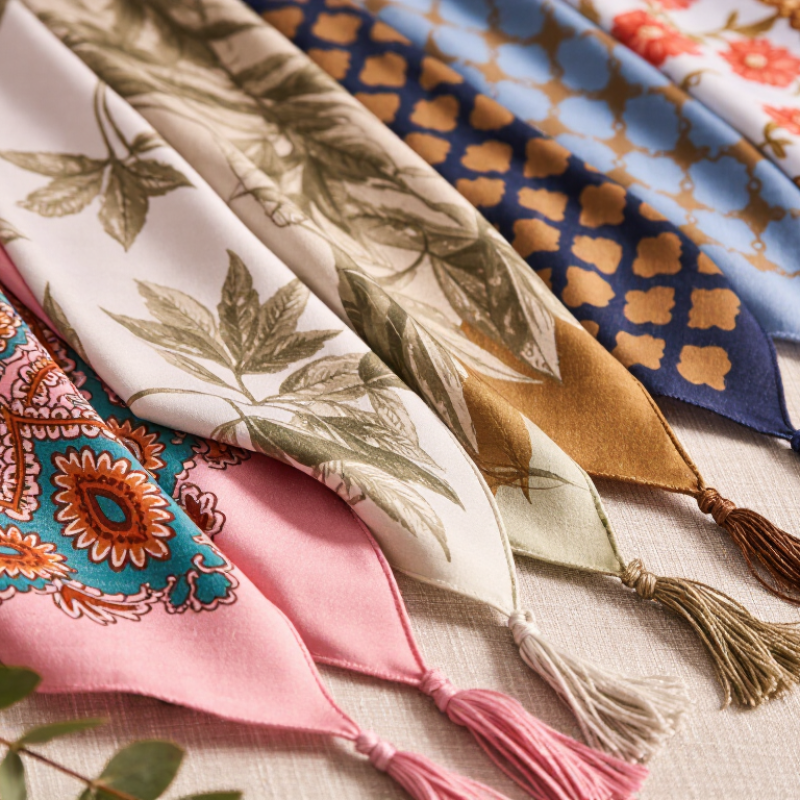
Cotton Printed Tassel Scarves are entering 2026 with a stronger role in global fashion accessories. Buyers are seeking breathable cotton, expressive prints, dependable colors, and practical finishing. Tassels add movement. They also add risk.
A well-designed scarf should feel soft against the neck, fold without heavy creasing, and retain its print after repeated care. Floral borders, geometric repeats, hand-inspired motifs, and earthy palettes are gaining attention across wholesale collections. Yet trends differ between markets. A bright paisley may attract buyers in one region, while muted botanical artwork performs better elsewhere.
William Morris, the influential British textile designer, famously said, “Have nothing in your houses that you do not know to be useful, or believe to be beautiful.” His principle remains relevant to Cotton Printed Tassel Scarves. Visual appeal must support daily use, not replace it.
This guide examines the leading 2026 styles for importers, retailers, and private-label teams. It considers cotton quality, printing methods, tassel construction, dimensions, colorfastness, packaging, and supplier communication. These details matter when products travel through different climates and retail systems.
Small details decide trust.
A loose tassel can damage presentation. Uneven printing can create customer complaints. Buyers should request samples, test washing performance, and confirm fiber information before placing large orders. No forecast is flawless. Consumer preferences can shift quickly, and some fashionable colors may age poorly.
The strongest collections balance useful design with emotional appeal. For global buyers, that balance may define the most reliable Cotton Printed Tassel Scarves in 2026.
2026 Top Cotton Printed Tassel Scarves for Global Buyers
Cotton printed tassel scarves are lightweight textile accessories made mainly from cotton fabric, with printed patterns and decorative fringe ends. They serve practical and visual purposes. Buyers use them for neckwear, shoulder draping, travel coverage, modest styling, and seasonal gifting. Cotton offers breathability and a familiar hand feel, while tassels add movement and shelf appeal.
The HS 6214 scope covers shawls, scarves, mufflers, mantillas, veils, and similar articles. Under the Harmonized System, cotton scarves commonly fall under 6214.90, covering other textile materials. However, classification can change with fiber composition, fabric construction, finishing, and national customs interpretation. The World Customs Organization remains the key reference for HS structure. Textile Exchange’s Materials Market Report 2024 estimates global fiber production reached about 124 million tonnes in 2023, with cotton representing roughly 19%. This supports cotton’s continued relevance, but sustainability claims still require evidence. A certificate alone may not prove every production detail.
Tips: Request the fiber percentage, fabric weight, dimensions, tassel attachment method, colorfastness results, and packing details. Ask for a pre-production sample. Check whether printed colors remain clear after washing. Small errors matter. I have seen attractive samples fail because tassels shed during handling. Buyers should also confirm the applicable national tariff schedule before shipment, rather than relying only on the six-digit HS heading.
The 2026 market for cotton printed tassel scarves should begin with supply and demand, not decoration.
ICAC data offers a useful baseline for reviewing global cotton production, mill use, stocks, and trade flows. These figures can reveal whether raw cotton availability may support stable scarf sourcing. However, seasonal forecasts change. Weather, planting decisions, and freight conditions can quickly alter the picture.
For buyers, cotton quality remains practical evidence. Ask for fiber composition, fabric weight, colorfastness results, and shrinkage measurements. A soft scarf with uneven tassels may look attractive online but fail during inspection. Printed patterns also need careful checking under natural light. Some forecasts may appear precise, yet they are still estimates. I have seen purchasing plans rely too heavily on one report. That is risky, and worth admitting.
Tips: Compare the latest ICAC figures with supplier capacity and regional harvest updates. Request a small sample before confirming volume. Check tassel attachment by gently pulling several pieces. Record acceptable defects in writing. Leave room for price changes. A low quote can hide weaker cotton or rushed finishing. Use data as a guide, not a guarantee.
2026 Top Cotton Printed Tassel Scarves for Global Buyers
Organic cotton is becoming a measurable sourcing issue, not just a design preference. Textile Exchange reports 342,265 tonnes of organic cotton production, equal to 1.4% of global cotton output. This figure appears small. Its commercial meaning is not small. Limited certified supply can affect lead times, minimum order quantities, and seasonal pricing for printed tassel scarves.
For 2026 collections, buyers should request transaction certificates and scope certificates from suppliers. These documents help verify organic content through processing and shipment. The Organic Cotton Market Report also highlights the importance of supply-chain transparency and reliable production records. Buyers should compare fiber claims with yarn counts, fabric weight, and production volumes. A soft scarf can still fail inspection.
Details matter.
Printed cotton scarves need clear artwork, stable color, and secure tassels. Pre-washing samples can reveal shrinkage before bulk production. Testing should include colorfastness to rubbing, washing, and perspiration. Tassel attachment also deserves physical inspection, especially after repeated handling. In my experience, printed patterns often look excellent on samples but lose definition on larger production runs. That gap needs reflection. Organic certification does not automatically guarantee perfect workmanship, ethical labor conditions, or low-impact dyeing. Buyers should review audit validity, processing locations, and corrective-action records. A practical 2026 specification should combine certified organic fiber, documented traceability, tested fabric performance, and realistic delivery planning.
| Data Dimension | Buyer Reference Value | Practical Purchasing Relevance | Data Type / Source |
|---|---|---|---|
| Organic cotton benchmark | 342,265 tonnes | Reference volume for organic cotton used to contextualize sustainable fiber sourcing. | Textile Exchange benchmark cited in the title |
| Share of global cotton output | 1.4% | Indicates the limited scale of organic cotton compared with total global cotton production. | Textile Exchange benchmark cited in the title |
| Recommended scarf composition | 100% cotton | Provides a clear fiber profile for printed scarf specifications and customs documentation. | Product specification benchmark |
| Suggested organic option | 100% organic cotton | Suitable for buyers seeking a single-fiber organic cotton product, subject to valid certification and transaction scope. | Product specification benchmark |
| Common scarf size | 70 × 180 cm | Offers practical neck coverage while remaining suitable for folding, packing, and retail display. | Commercial product specification benchmark |
| Tassel length | 8–10 cm | Creates visible decorative movement without substantially reducing the usable printed area. | Commercial product specification benchmark |
| Fabric weight | 90–120 g/m² | Balances lightweight handling, print clarity, and year-round wearability. | Commercial product specification benchmark |
| Fabric construction | Plain weave | Provides a stable, versatile base for printed cotton scarf designs. | Textile construction specification |
| Printing requirement | Reactive printing for cotton | Supports strong color fixation on cellulosic fibers when processed with suitable washing and finishing controls. | Textile processing specification |
| Colorfastness target | Specify by test method and buyer standard | Results depend on dye class, washing process, fabric construction, and the applicable destination-market requirements. | Testing requirement; no universal value assigned |
| Care instruction | Wash according to the tested care label | Care instructions should match actual shrinkage, colorfastness, fabric finish, and tassel construction results. | Product compliance requirement |
| Packaging format | Folded individual unit with recyclable paper insert | Helps protect the printed surface and tassels during export handling while supporting lower-plastic packaging goals. | Packaging specification benchmark |
| Certification documentation | Verify certificate, scope, transaction certificate, and fiber content | Documentation should be checked for the relevant product, facility, production period, and shipment before making organic claims. | Organic textile due-diligence requirement |
| Buyer quality-control checkpoints | Dimensions, fabric weight, print registration, colorfastness, shrinkage, stitching, and tassel security | These checkpoints help align pre-production samples, bulk production, and destination-market acceptance criteria. | Standard purchasing inspection framework |
All product figures are buyer specification benchmarks rather than company or brand data. Organic cotton claims should be supported by current, applicable certification documentation.
For 2026 cotton printed tassel scarves, construction starts with the print method. Textile Exchange’s Materials Market Report 2024 records 124 million tonnes of global fibre production in 2023, with cotton remaining a major natural fibre. Reactive printing suits cotton because dyes bond with the fibre and support repeated washing. Pigment printing uses simpler processing, but may feel slightly stiffer. Digital printing works well for small runs and detailed borders. I would not assume digital always means lower impact; ink chemistry and pretreatment still require verification.
GSM changes the buying experience. Lightweight scarves around 70–90 GSM fold easily and suit warm climates. A 100–130 GSM structure gives stronger drape and better opacity. Tests should include fabric weight under ISO 3801, colourfastness under ISO 105-C06, and dimensional change after washing. Tassels need careful selection. Cotton tassels offer visual continuity, while viscose gives a smoother, fluid movement. Recycled polyester can improve abrasion resistance, though it may feel less natural. Shedding is easy to overlook.
Size options should match regional use. A 70 × 180 cm scarf supports compact neck styling, while 90 × 190 cm offers broader shoulder coverage. Tassel length between 6 and 10 cm creates visible movement without excessive bulk. The USDA Foreign Agricultural Service’s Cotton: World Markets and Trade report continues to track cotton supply, mill use, and trade volatility, reminding buyers that fibre choices affect availability and pricing. Sample checks remain essential. A print can look excellent on screen, yet fail beside uneven tassel density or a rough hem.
2026 Top Cotton Printed Tassel Scarves for Global Buyers
Global Buyer Checklist: AQL 2.5, OEKO-TEX, Labeling, and Import Documents
A reliable purchase begins with a written inspection plan. AQL 2.5 may guide general defects, but buyers should define sample size and defect limits before production. Check print alignment, color consistency, loose threads, tassel attachment, fabric holes, and packaging damage. A scarf can look attractive yet fail after washing. Test shrinkage and color fastness on finished pieces, not only fabric swatches.
OEKO-TEX documentation requires careful verification. Confirm the certificate holder, product scope, validity period, and covered materials. The certificate should match the actual cotton fabric, dyes, sewing thread, and accessories where applicable. Do not accept a certificate image without checking its reference details. It is a small step. It prevents expensive confusion.
Labels need practical review before bulk packing. Confirm fiber composition, care symbols, country of origin, importer details, and required language for each destination. Requirements differ by market. Import files commonly include a commercial invoice, packing list, transport document, customs classification, and origin or test documents when requested. Keep carton markings consistent with the invoice. One recurring lesson is uncomfortable: a passed inspection does not guarantee smooth customs clearance. The checklist is useful, but never complete. Recheck destination rules before shipment.
They are lightweight cotton accessories with printed patterns and fringe ends. They can cover the neck, shoulders, or head.
Buyers use them for neckwear, travel coverage, modest styling, seasonal gifts, and shoulder draping. They work across several seasons.
Cotton feels familiar and breathable. It also accepts printed designs well, although fabric quality can vary between batches.
HS 6214 generally covers shawls, scarves, mufflers, mantillas, veils, and similar textile articles. Cotton scarves often appear under 6214.90.
Yes. Fiber content, fabric construction, finishing, and national customs rules may affect classification. Check the destination country’s tariff schedule before shipment.
Request fiber percentages, fabric weight, dimensions, tassel attachment details, colorfastness results, and packing specifications. Ask for a pre-production sample.
Test samples for washing, rubbing, and perspiration colorfastness. Compare the artwork before and after washing. Clear samples can still disappoint.
Request valid transaction certificates and scope certificates. Compare the claims with yarn counts, fabric weight, production volume, and processing locations.
Inspect tassels after repeated handling. Check for shedding, loose attachments, shrinkage, and blurred patterns. Small defects matter.
No. Certification does not automatically prove excellent workmanship, ethical labor, or low-impact dyeing. Buyers should review audits and corrective actions.
Cotton Printed Tassel Scarves are versatile textile accessories made from cotton fabric, enhanced with printed patterns and decorative tassels for fashion, gifting, seasonal collections, and promotional use. This guide explains their classification within the HS 6214 scope and presents a 2026 market baseline using cotton supply and demand data from ICAC. It also highlights the organic cotton benchmark of 342,265 tonnes, representing 1.4% of total output according to the supplied industry reference.
For global buyers, product quality depends on print clarity, colorfastness, tassel fiber selection, fabric GSM, and suitable size options. Common print methods should be evaluated according to order volume, artwork complexity, and durability requirements. Before purchasing, buyers should confirm an AQL 2.5 inspection standard, request OEKO-TEX documentation where applicable, and review fiber-content labels, care instructions, country-of-origin details, packing marks, commercial invoices, packing lists, and other import documents. These checks support consistent quality, smoother customs processing, and reliable international sourcing.