Industry Insights & Manufacturing Knowledge
Expert guides, textile sourcing strategies, quality assurance tips, and international export trends from KK Fashion Exports.
The 2026 market for Cotton Bandana Scarves is becoming more practical, varied, and quality-focused. Global buyers now seek dependable fabrics, clear specifications, and designs that suit different climates. A lightweight cotton scarf may work well in summer markets, while a denser weave offers better coverage during cooler seasons. Small details matter. Stitching, colorfastness, edge finishing, and print consistency can affect customer satisfaction and return rates.
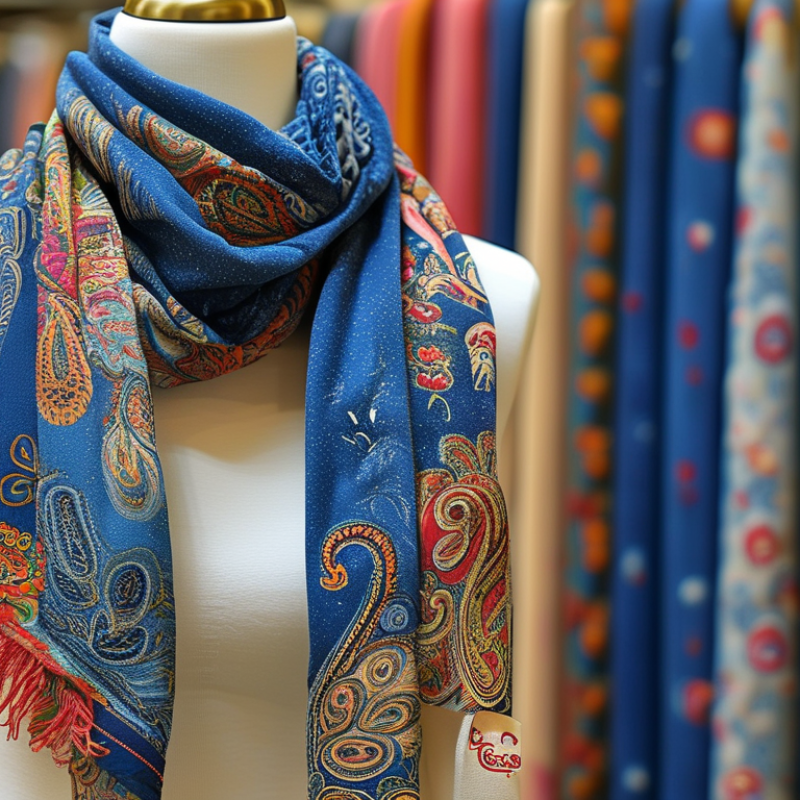
This guide examines leading Cotton Bandana Scarves for importers, retailers, promotional buyers, and private-label brands. It considers fabric weight, cotton composition, dimensions, patterns, packaging, customization, and order flexibility. Buyers should request samples before approving bulk production. A blue paisley print may look accurate on a screen but appear darker under warehouse lighting. Supplier communication also deserves attention. Reliable partners should provide measurable product details, realistic production timelines, and relevant quality documentation. Independent testing may be useful for color performance and fiber claims.
Market preferences can change quickly.
There is no perfect sourcing formula. A low unit price may hide higher packaging costs, inconsistent sizing, or slower replenishment. Buyers must compare the complete landed cost, not only the factory quotation. Environmental expectations also require careful review. Cotton sourcing, dye processes, recycled packaging, and supplier transparency should be checked rather than assumed. This overview offers a practical starting point for informed purchasing decisions in 2026. Some recommendations may need adjustment as fashion cycles, freight conditions, and regional demand evolve. Careful sampling remains essential.
2026 Top Cotton Bandana Scarves for Global Buyers
Cotton bandana scarves are small, woven accessories with a square or rectangular shape. They usually feature a folded, stitched edge and a breathable cotton construction. Buyers wear them around the neck, head, wrist, or ponytail. Some also fold them into pocket squares or light dust covers. The fabric feels familiar. That matters.
The fabric feels familiar.
That matters.
Demand sits within a large cotton supply chain.
Textile Exchange’s Materials Market Report 2024 recorded about 124 million tonnes of global fiber production in 2023, with cotton representing roughly one-fifth. USDA Foreign Agricultural Service’s Cotton: World Markets and Trade report for 2024/25 estimated global cotton mill use above 116 million 480-pound bales. These figures support cotton’s continued relevance, but they do not guarantee product quality. A scarf can still shrink, bleed color, or feel rough after washing.
124 million tonnes
of global fiber production in 2023
Above 116 million
480-pound bales of global cotton mill use
For global buyers, practical uses should guide specifications. A lightweight 50–70 gram scarf suits warm-weather neckwear and hair styling. A denser weave offers better coverage for outdoor work, travel, or moderate sun exposure. Check fiber composition, fabric weight, seam strength, dimensional change, and colorfastness before ordering. Test samples after washing. This step is easy to skip. It should not be.
Test samples after washing.
This step is easy to skip. It should not be.
Buyers should also request traceability details and applicable textile safety documentation. Small accessories often receive less testing than garments, which is an uncomfortable weakness in the supply chain.
2026 Top Cotton Bandana Scarves for Global Buyers
For global buyers, a cotton bandana scarf should be judged by performance, not appearance alone. I usually begin with fiber content, fabric weight, and the supplier’s inspection records. Combed cotton feels smoother, while carded cotton can offer a more textured, economical hand. Lightweight poplin suits warm markets; twill feels denser and holds shape better. Gauze is breathable, but its open structure may snag during packing or repeated use.
Weave details need practical testing. Plain weave gives a balanced surface and clear printing. Twill adds diagonal texture and often resists creasing better. A buyer should request wash trials, colorfastness results, seam checks, and shrinkage measurements. A 5% shrinkage result may change the final fit. That detail is easy to miss. In my sourcing work, size labels sometimes vary between suppliers. A listed 55-by-55-centimeter scarf may arrive slightly smaller after washing. Confirm prewash and postwash dimensions in writing.
Design features should match the intended use. Rolled edges create a cleaner finish. Reinforced corners help with outdoor handling. Breathable printing works better in warmer climates. Do not overvalue elaborate artwork. A dense print can reduce softness and airflow. For custom orders, check color limits, edge tolerance, label placement, and carton protection. I would also compare actual samples, not only digital images. Screens can hide rough edges and uneven dye coverage. No sample is perfect. But visible flaws should be documented before approval.
For global buyers, evaluating cotton bandana scarves in 2026 requires more than checking a bright pattern. Begin with fiber evidence. Ask for material specifications, yarn count, fabric weight, and test results. A practical sample should feel breathable, hold its shape, and show even stitching along the hem. I often inspect a folded corner under strong light. Loose threads and uneven dye usually reveal weak process control. Cotton quality still matters.
Compare dimensions after washing, not only before. A 55-centimeter square may shrink noticeably when finishing is unstable. Request a controlled wash test and record shrinkage, colorfastness, pilling, and seam strength. For buyers serving different climates, absorbency and drying speed deserve equal attention. A heavy scarf may feel premium but become uncomfortable in humid markets. That assumption needs testing. Also assess packaging, carton protection, labeling accuracy, and production capacity against your delivery schedule. Supplier audit evidence, traceable samples, and consistent replies build confidence.
Price can mislead. A low quote may exclude testing, protective packaging, or realistic replacement allowances. Ask whether dyes meet applicable textile requirements in the destination market, and keep written compliance records. Review sampling timelines and inspect a second batch, because one excellent sample proves little. I have seen attractive prototypes fail after repeated washing. It happens. Document acceptance limits for color variation, measurements, and defects before ordering. Clear specifications reduce disputes, although they cannot replace physical inspection.
2026 Top Cotton Bandana Scarves for Global Buyers
International Standards, Sustainability, and Sourcing Requirements
Global buyers should treat cotton bandana scarves as tested textile products, not simple accessories. In sourcing reviews, I check fiber composition, fabric weight, colorfastness, shrinkage, and seam strength. A clear technical sheet prevents surprises after bulk production. Ask for laboratory reports covering harmful substances, especially restricted dyes, formaldehyde, and heavy metals. ISO-based test methods can support consistent results across suppliers and markets.
Sustainability requires more than recycled packaging. Buyers should request cotton traceability, responsible water management, renewable energy records, and documented wastewater treatment. Organic or recycled content needs credible transaction records, not only a printed claim. Look closely at the mill. Can it identify the spinning, weaving, dyeing, and finishing locations? Small details matter, such as paper tags, low-impact inks, and carton moisture protection.
Supplier evaluation should include a factory audit, sample approval, production inspection, and corrective-action plan. Confirm social compliance, worker safety, legal wages, and working-hour records through reliable documentation. I would also compare pre-production samples with shipment samples, because colors can drift under different lighting. That mistake is common. It still deserves attention. No certificate replaces physical inspection, and no sustainability statement should be accepted without evidence. Some buyers focus heavily on price, then discover higher costs through rework, delays, or rejected goods. A better sourcing decision balances performance, environmental impact, documentation, and long-term supplier reliability.
Minimum fiber-content thresholds associated with selected international organic and recycled textile standards
For cotton bandana sourcing, certification thresholds help buyers verify organic or recycled content before approving a supplier. The percentages shown represent the minimum material-content requirement for the selected claim or standard category; they are not quality scores and should not be compared as a single sustainability ranking.
Reference framework: Global Organic Textile Standard (GOTS), Organic Content Standard (OCS), Global Recycled Standard (GRS), and Recycled Claim Standard (RCS). Buyers should also request transaction certificates, scope certificates, chemical-compliance test reports, colorfastness results, and product traceability records.
2026 Top Cotton Bandana Scarves for Global Buyers
In 2026, cotton bandana scarves are judged by more than color and print. Global buyers should confirm fiber content, fabric weight, dimensions, and stitching before ordering. A practical specification may include 100% cotton, 60–90 GSM fabric, reinforced hems, and pre-shrinking. Custom patterns require clear artwork files, approved color references, and a physical sample. Details matter. Screen printing suits simple graphics, while reactive dyeing can produce softer, deeper colors. However, color results may vary slightly between production batches.
Care instructions should match the fabric and decoration. Cold washing, mild detergent, and low-temperature drying usually reduce fading and shrinkage. Buyers should request wash-test results, colorfastness records, and packaging details. Test it. A scarf that looks excellent under factory lighting may appear weaker after five washes. This is an easy mistake, and it deserves more attention.
Pricing depends on cotton grade, GSM, size, printing method, order quantity, packaging, and shipping terms. The lowest quotation can hide sampling fees, weak inspection, or inconsistent measurements. Reliable suppliers should provide a detailed quotation, production timeline, tolerance standards, and pre-shipment inspection options. Check their quality records and communication speed. A small trial order is safer than a large commitment. Still, supplier selection is not perfectly predictable; even careful buyers may need to revise specifications after real-use testing.
| Category | Evaluation Dimension | Typical Market Range or Data | Global Buyer Consideration |
|---|---|---|---|
| Product Construction | Primary fiber | 100% cotton Cotton blends | 100% cotton is generally preferred for absorbency, breathability, and a natural hand feel. Blended fabrics may improve wrinkle resistance, color retention, or cost efficiency, but the fiber composition should be verified on the product specification and care label. |
| Common finished sizes | Approximately 50 × 50 cm to 70 × 70 cm (20 × 20 in to 28 × 28 in) | A 55 × 55 cm or 60 × 60 cm format is commonly suitable for neckwear, headwear, pocket styling, and promotional use. Confirm finished size after washing because cotton can shrink. | |
| Fabric weight | Approximately 60–120 g/m² | Around 60–80 g/m² creates a lighter, softer scarf, while approximately 90–120 g/m² offers more opacity, durability, and color saturation. The selected weight should match the intended climate and end use. | |
| Weave and surface | Plain weave; smooth, gauze, slub, or brushed surfaces | Plain weave is widely used because it supports stable printing and predictable cutting. Slub or brushed surfaces add texture but may slightly reduce fine-detail sharpness in printed artwork. | |
| Edge finish | Rolled hem, single-fold hem, double-fold hem, or overlocked edge | A double-fold or rolled hem generally provides a cleaner retail appearance. Ask for an approved sample to check corner neatness, stitch density, loose threads, and wash durability. | |
| Colorfastness target | Request test results using an agreed ISO, AATCC, or equivalent method | Do not rely only on visual inspection. Specify acceptable color change, staining, perspiration, washing, and rubbing performance according to the destination market and product use. | |
| Customization | Printing methods | Screen printing Reactive printing Pigment printing Digital textile printing | Screen printing is suitable for simpler artwork and larger runs. Reactive printing is commonly selected for cotton when soft handle and wash resistance are priorities. Digital printing supports detailed artwork and lower-volume development. |
| Artwork requirements | Vector artwork preferred; raster files commonly supplied at 150–300 dpi at final size | Provide the repeat size, color references, bleed allowance, safe area, and placement diagram. Request a digital proof and physical pre-production sample before bulk manufacturing. | |
| Custom dimensions | Available by cutting pattern and fabric width | Non-standard dimensions may increase fabric consumption, cutting waste, sampling charges, and production complexity. Confirm tolerance, usually stated in millimeters or centimeters, before approval. | |
| Private labeling and packaging | Woven or printed care labels, hangtags, paper bands, polybags, cartons | Specify label fiber content, country-of-origin marking, language requirements, barcode format, packaging materials, carton dimensions, and packaging quantity per carton. | |
| Sustainability options | Recycled or reduced packaging; certified cotton where available | Certification claims should be supported by current transaction certificates, scope documents, or other valid records. Avoid treating a supplier declaration alone as proof of certification. | |
| Care and Performance | Recommended washing | Machine wash cold or warm according to the tested care instruction; use mild detergent | Care instructions must match the actual fabric and dye system. Separate dark and light colors, particularly during the first wash, to reduce the risk of color transfer. |
| Drying and ironing | Line dry or tumble dry low where permitted; iron on a cotton setting | High heat can increase shrinkage, distort printed areas, or affect finishing. A supplier should provide a care label recommendation based on wash testing rather than a generic template. | |
| Shrinkage allowance | Often approximately 2–8%, depending on fabric finishing and washing conditions | The percentage is not universal. Measure pre-wash and post-wash samples in both length and width, and include the approved tolerance in the purchase specification. | |
| Packaging and transport protection | Moisture-resistant inner protection with export cartons suitable for the shipping route | Cotton products can absorb moisture and odors during storage or transit. Confirm carton strength, humidity protection, carton markings, and pallet requirements before shipment. | |
| Indicative Pricing | Bulk unit price, basic printed style | Approximately USD 0.70–2.50 per piece at larger production quantities | This is an indicative factory-level range only and may exclude sampling, labels, packaging upgrades, testing, freight, duties, and taxes. Fabric weight, size, print coverage, and order quantity have a major effect on price. |
| Small-batch or development quantity | Often approximately USD 2.00–8.00+ per piece | Small orders may carry higher costs because setup, screens, digital preparation, cutting, and packaging are spread across fewer pieces. Request a separate sample price and bulk price. | |
| Sampling cost | Commonly charged separately; may be credited against a qualifying bulk order | Clarify whether the sample includes fabric, print setup, labels, packaging, courier delivery, and revisions. A sample approval should not be assumed to include free artwork development. | |
| Typical MOQ | Approximately 100–1,000 pieces per design or color; larger runs may be required for some print processes | MOQ can be based on pieces, print color, artwork, fabric color, or production batch. Ask whether different sizes or colorways can be combined to meet the minimum. | |
| Trade-term impact | EXW, FOB, FCA, CIF, DAP, and other terms produce different landed costs | Compare suppliers using the same Incoterm, destination, currency, packaging standard, and payment assumptions. Calculate total landed cost rather than comparing unit price alone. | |
| Production and Logistics | Sample lead time | Approximately 5–15 working days for standard development; longer for complex artwork or custom fabric | Lead time normally starts after artwork, specifications, payment, and material availability are confirmed. Ask for a dated sample schedule and revision policy. |
| Bulk production lead time | Approximately 15–35 working days after sample approval and deposit | Peak-season capacity, fabric dyeing, special finishing, testing, and custom packaging can extend production. Include inspection and transit time in the overall delivery plan. | |
| Quality inspection checkpoints | Pre-production, during production, final random inspection, and pre-shipment review | Inspect dimensions, fabric weight, print registration, color, edge stitching, stains, loose threads, packaging, carton quantity, and barcode readability against the approved sample. | |
| Common quality tolerances | Define size, weight, color, print position, and defect tolerances in the purchase order | Tolerances should be agreed before production. A general industry tolerance is not a substitute for a written specification, especially for tightly positioned artwork or uniform sets. | |
| Documentation | Commercial invoice, packing list, transport document, test reports, origin documents where applicable | Documentation requirements vary by destination and product claims. Confirm import classification, labeling rules, chemical restrictions, and any required conformity documents with the buyer’s customs adviser. | |
| Supplier Selection | Manufacturing capability | Verify weaving or fabric sourcing, dyeing, printing, cutting, sewing, packing, and subcontracting controls | A supplier that manages more production stages may offer better coordination, but buyers should still verify actual capacity and identify any outsourced processes. |
| Sample consistency | Bulk production should match the approved reference sample and signed specification | Retain an approved sealed sample, color standard, artwork proof, measurement chart, and packaging reference. These documents provide a practical basis for final inspection. | |
| Testing capability | Colorfastness, dimensional stability, fiber composition, restricted substances, and seam performance where relevant | Request test method, laboratory identity, test date, sample identification, and results. Recent, product-specific reports are more useful than generic certificates. | |
| Communication and order control | Clear quotation, documented revisions, production schedule, and escalation contact | Evaluate response accuracy, not only speed. A reliable supplier should confirm assumptions about artwork, color, quantity, tolerances, packaging, delivery terms, and payment milestones. | |
| Compliance and traceability | Business registration, factory or facility information, material records, and applicable social or environmental documentation | Match all compliance claims to the selling entity, production site, and relevant product scope. Conduct verification appropriate to order value and destination-market risk. | |
| Commercial risk controls | Written purchase order, staged payment, inspection before balance payment, and clear remedy terms | Define acceptance criteria, delay responsibility, replacement or credit terms, intellectual-property handling, confidentiality, and dispute jurisdiction before placing the order. |
: Confirm the cotton content, yarn count, fabric weight, and test results. A practical range is 60–90 GSM. The fabric should feel breathable and keep its shape. Material claims need written evidence.
Check the hem under strong light. Look for even stitching, reinforced edges, and loose threads. Folded corners often reveal weak process control. Small defects matter.
Yes. Measure the scarf before and after a controlled wash. A 55-centimeter square may shrink noticeably. Record shrinkage, colorfastness, pilling, and seam strength. Pre-washing results can expose unstable finishing.
Check absorbency and drying speed. A heavy scarf may feel premium but become uncomfortable. That assumption needs testing. Comfort is not guaranteed by weight.
Provide clear artwork files and approved color references. Request a physical sample before production. Simple graphics may suit screen printing. Reactive dyeing can create softer, deeper colors. Color results may vary between batches.
Request wash-test results and colorfastness records. Cold washing and mild detergent usually reduce fading. Low-temperature drying may limit shrinkage. Inspect the scarf after five washes. Factory lighting can be forgiving.
Check cotton grade, GSM, size, printing method, quantity, and packaging. Review shipping terms and sampling fees. A low quote may exclude testing or replacement allowances. The cheapest option is not always economical.
Request traceable samples, quality records, and production timelines. Confirm measurement tolerances and defect limits in writing. Inspect a second batch, because one sample proves little. A small trial order is safer. Still, careful planning cannot predict everything.
Cotton Bandana Scarves remain versatile textile accessories for global buyers in 2026, serving practical, fashion, promotional, outdoor, and uniform-related purposes. When comparing products, buyers should review cotton fiber quality, fabric weight, weave structure, softness, breathability, colorfastness, edge finishing, standard sizes, and print clarity. Design details such as pattern placement, color combinations, folding performance, and optional labels can also influence usability and perceived value.
A reliable evaluation process should include sample testing, production consistency, packaging review, and communication with qualified suppliers. Buyers should confirm applicable international textile safety requirements, responsible production practices, material traceability, and sustainability options such as recycled packaging or lower-impact dyes. Customization may cover dimensions, artwork, colors, stitching, and packing formats, while care instructions should support long-term appearance and durability. Pricing should be assessed by considering fabric specifications, order volume, customization complexity, shipping, and quality control rather than unit cost alone. Selecting a supplier with transparent documentation, stable capacity, and clear quality standards helps reduce sourcing risks and supports dependable international purchasing.